Thymidine kinase
Thymidine kinase (TK) is an enzyme that is found in most living organisms. It plays a crucial role in the DNA replication process, as it is responsible for the phosphorylation of thymidine, a nucleoside that is one of the building blocks of DNA.
Function[edit]
Thymidine kinase catalyzes the transfer of a phosphate group from adenosine triphosphate (ATP) to thymidine, producing thymidine monophosphate (TMP) and adenosine diphosphate (ADP). This reaction is a key step in the salvage pathway, a method of recycling nucleosides produced during DNA replication and repair.
Structure[edit]
Thymidine kinase exists in two forms: TK1 and TK2. TK1 is a cytosolic enzyme that is active during the S phase of the cell cycle, while TK2 is a mitochondrial enzyme that is active throughout the cell cycle. Both forms of the enzyme are homodimers, meaning they consist of two identical subunits.
Clinical significance[edit]
Thymidine kinase is a target for antiviral drugs, such as acyclovir, which is used to treat herpes simplex virus infections. The enzyme is also a useful biomarker for certain types of cancer, as its activity is often elevated in cancer cells.
See also[edit]
- DNA replication
- Nucleoside
- Phosphate group
- Adenosine triphosphate
- Thymidine monophosphate
- Adenosine diphosphate
- Salvage pathway
- Cell cycle
- Herpes simplex virus
- Biomarker
- Cancer
| Enzymes | ||||||||||
|---|---|---|---|---|---|---|---|---|---|---|
|
 | This cell biology article is a stub. You can help WikiMD by expanding the page. |
| Virology | ||||||||||
|---|---|---|---|---|---|---|---|---|---|---|
This virology-related article is a stub. You can help WikiMD by expanding it.
|
| Oncology | ||||||||||
|---|---|---|---|---|---|---|---|---|---|---|
This oncology-related article is a stub.
|
.svg) | This biochemistry article is a stub. You can help WikiMD by expanding the page. |
Thymidine_kinase[edit]
-
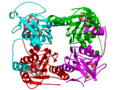 Thymidine kinase structure
 -
 2'-Deoxythymidine
 -
 2'-Deoxythymidine monophosphate
 -
 Zidovudine
 -
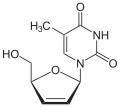 Stavudine
 -
 Idoxuridine
 -
Aciclovir
-
Ganciclovir


Advertise on WikiMD — 81,000+ full articles, ~900,000 total pages, ~250 million page views. Global reach, limited time promotional rates from $1/page/day. Learn more · View stats


Translate page: - East Asian
中文,
日本,
한국어,
South Asian
हिन्दी,
தமிழ்,
తెలుగు,
Urdu,
ಕನ್ನಡ,
Southeast Asian
Indonesian,
Vietnamese,
Thai,
မြန်မာဘာသာ,
বাংলা
European
español,
Deutsch,
français,
Greek,
português do Brasil,
polski,
română,
русский,
Nederlands,
norsk,
svenska,
suomi,
Italian
Middle Eastern & African
عربى,
Turkish,
Persian,
Hebrew,
Afrikaans,
isiZulu,
Kiswahili,
Other
Bulgarian,
Hungarian,
Czech,
Swedish,
മലയാളം,
मराठी,
ਪੰਜਾਬੀ,
ગુજરાતી,
Portuguese,
Ukrainian
About WikiMD • Contact • Disclaimer • Privacy • Copyright • Site statistics
Some content and images may originate from Wikimedia Commons or Wikipedia and remain subject to their stated licenses. Unless otherwise noted, eligible WikiMD content is available under CC BY-SA 4.0.
WikiMD Wellnesspedia — Free health & wellness information for patients, students, and health professionals.


