Molecular lesion
Molecular Lesion refers to a specific, localized change or damage to the molecular structure of DNA, RNA, or protein molecules within cells. These lesions can result from various internal and external factors, including oxidative stress, radiation, chemical exposure, and errors during DNA replication or repair. Understanding molecular lesions is crucial in the fields of molecular biology, genetics, and medicine, as they are often the initiating events leading to mutations, cancer, and other genetic disorders.
Types of Molecular Lesions[edit]
Molecular lesions can be broadly categorized based on the molecule affected (DNA, RNA, or protein) and the nature of the damage.
DNA Lesions[edit]
DNA lesions are perhaps the most studied due to their critical role in genetic inheritance, cell cycle regulation, and cancer development. Common types of DNA lesions include:
- DNA double-strand breaks (DSBs)
- Single-strand breaks (SSBs)
- Base modifications (e.g., oxidation, methylation)
- Crosslinks (both interstrand and intrastrand)
RNA Lesions[edit]
While RNA lesions are less well-understood, they can significantly affect gene expression and protein synthesis. Types of RNA damage include:
- mRNA degradation
- tRNA and rRNA modifications
- RNA editing errors
Protein Lesions[edit]
Protein lesions often result from misfolding, aggregation, or chemical modifications, leading to loss of function or toxic gain of function. Examples include:
- Amyloid fibrils in neurodegenerative diseases
- Oxidized proteins due to reactive oxygen species
- Ubiquitination and proteasomal degradation failures
Causes of Molecular Lesions[edit]
Molecular lesions can arise from endogenous sources, such as metabolic processes and cellular respiration, or from exogenous sources, including:
- Ultraviolet (UV) radiation
- Ionizing radiation
- Chemical carcinogens
- Viral infections
Detection and Repair[edit]
Cells have evolved complex mechanisms to detect and repair molecular lesions, maintaining genomic stability and preventing disease. Key repair pathways include:
- Nucleotide excision repair (NER) for UV-induced lesions and bulky chemical adducts
- Base excision repair (BER) for small base modifications
- Mismatch repair (MMR) for replication errors
- Homologous recombination (HR) and Non-homologous end joining (NHEJ) for DSBs
Clinical Significance[edit]
Molecular lesions play a pivotal role in the development of many diseases, particularly cancer. Understanding the mechanisms of lesion formation and repair provides insights into cancer prevention, diagnosis, and treatment. Additionally, molecular lesions are targets for certain chemotherapeutic agents and radiation therapy, which aim to induce lethal damage in cancer cells.
 | This medical article is a stub. You can help WikiMD by expanding the page. |
Molecular_lesion[edit]
-
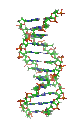 DNA orbit animated
 -
 Thymine photodimer
 -
Types of DNA Damage
-
 BER basic pathway
 -
Recombinational repair of DNA double-strand damage


Medical Disclaimer: WikiMD is for informational purposes only and is not a substitute for professional medical advice. Content may be inaccurate or outdated and should not be used for diagnosis or treatment. Always consult your healthcare provider for medical decisions. Verify information with trusted sources such as CDC.gov and NIH.gov. By using this site, you agree that WikiMD is not liable for any outcomes related to its content. See full disclaimer.
Credits:Most images are courtesy of Wikimedia commons, and templates, categories Wikipedia, licensed under CC BY SA or similar.
Translate page: - East Asian
中文,
日本,
한국어,
South Asian
हिन्दी,
தமிழ்,
తెలుగు,
Urdu,
ಕನ್ನಡ,
Southeast Asian
Indonesian,
Vietnamese,
Thai,
မြန်မာဘာသာ,
বাংলা
European
español,
Deutsch,
français,
Greek,
português do Brasil,
polski,
română,
русский,
Nederlands,
norsk,
svenska,
suomi,
Italian
Middle Eastern & African
عربى,
Turkish,
Persian,
Hebrew,
Afrikaans,
isiZulu,
Kiswahili,
Other
Bulgarian,
Hungarian,
Czech,
Swedish,
മലയാളം,
मराठी,
ਪੰਜਾਬੀ,
ગુજરાતી,
Portuguese,
Ukrainian


