Ribosomal RNA
Ribosomal RNA (rRNA) is a type of RNA that, together with proteins, makes up the ribosomes, the protein factories of the cell. rRNA is transcribed from DNA in the nucleolus, a specialized subregion within the nucleus of the cell.
Structure[edit]
Ribosomal RNA is the structural component of the ribosome. It provides a mechanism for decoding mRNA into amino acids and interacts with the tRNA during translation by providing peptidyl transferase activity. The structure of the ribosome is complex and it is made up of several dozen proteins and several rRNA molecules.
Function[edit]
The primary function of rRNA is to provide a mechanism for translation, the process of synthesizing proteins from amino acids. During translation, the ribosome reads the sequence of the mRNA and, using the genetic code, translates the sequence of RNA bases into the sequence of amino acids that makes up the protein.
Types[edit]
There are several types of rRNA, each of which has a different function in the ribosome. These include:
- 5S rRNA
- 16S rRNA
- 23S rRNA
- 28S rRNA
- 5.8S rRNA
See also[edit]

This WikiMD article can only be edited by registered and verified editors. You can log in or register.
Ribosomal_RNA[edit]
-
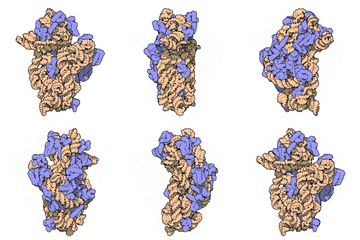 010 small subunit-1FKA


Medical Disclaimer: WikiMD is for informational purposes only and is not a substitute for professional medical advice. Content may be inaccurate or outdated and should not be used for diagnosis or treatment. Always consult your healthcare provider for medical decisions. Verify information with trusted sources such as CDC.gov and NIH.gov. By using this site, you agree that WikiMD is not liable for any outcomes related to its content. See full disclaimer.
Credits:Most images are courtesy of Wikimedia commons, and templates, categories Wikipedia, licensed under CC BY SA or similar.
Translate page: - East Asian
中文,
日本,
한국어,
South Asian
हिन्दी,
தமிழ்,
తెలుగు,
Urdu,
ಕನ್ನಡ,
Southeast Asian
Indonesian,
Vietnamese,
Thai,
မြန်မာဘာသာ,
বাংলা
European
español,
Deutsch,
français,
Greek,
português do Brasil,
polski,
română,
русский,
Nederlands,
norsk,
svenska,
suomi,
Italian
Middle Eastern & African
عربى,
Turkish,
Persian,
Hebrew,
Afrikaans,
isiZulu,
Kiswahili,
Other
Bulgarian,
Hungarian,
Czech,
Swedish,
മലയാളം,
मराठी,
ਪੰਜਾਬੀ,
ગુજરાતી,
Portuguese,
Ukrainian

