Indo-Aryan languages
Indo-Aryan languages are a major group of the Indo-European languages, spoken by at least 1.5 billion people primarily in India, Pakistan, Bangladesh, Nepal, Sri Lanka and the Maldives. They form a branch of the Indo-Iranian languages, themselves a branch of the larger Indo-European family.
History[edit]
The earliest evidence of the group is from Vedic Sanskrit, the language of the ancient Vedic religion in the late 2nd millennium BCE. The most widely spoken Indo-Aryan languages today are Hindi, Bengali, Punjabi, Urdu, Marathi, Gujarati, Sindhi, Sinhalese, Assamese, Odia, and Nepali.
Classification[edit]
The Indo-Aryan languages are traditionally divided into three main groups: Old Indo-Aryan (1500–600 BCE), Middle Indo-Aryan (600 BCE–1000 CE) and New Indo-Aryan (1000 CE–present). Each of these groups consists of several subgroups and individual languages.
Old Indo-Aryan[edit]
The Old Indo-Aryan stage is represented by Vedic Sanskrit and Classical Sanskrit. The Rigveda, a collection of Vedic Sanskrit hymns, is one of the oldest texts in any Indo-European language.
Middle Indo-Aryan[edit]
The Middle Indo-Aryan stage is represented by various Prakrit languages like Pali, Ardhamagadhi Prakrit, and Shauraseni Prakrit, and by the Apabhramsha stage of these languages.
New Indo-Aryan[edit]
The New Indo-Aryan stage is represented by the modern Indo-Aryan languages, such as Hindi, Bengali, Punjabi, Urdu, Marathi, Gujarati, Sindhi, Sinhalese, Assamese, Odia, and Nepali.
Phonology[edit]
Indo-Aryan languages have a rich and complex phonological system, with a large number of distinct vowel and consonant sounds. They also have a complex system of pitch accent, which is used to distinguish meaning in words.
Grammar[edit]
Indo-Aryan languages have a highly inflected grammar, with a complex system of noun declensions and verb conjugations. They also have a rich system of tense, aspect, mood, and voice in their verbs.
Writing systems[edit]
Most Indo-Aryan languages are written in one of several Brahmic scripts, including Devanagari, Bengali script, Gurmukhi, Gujarati script, Odia script, Sinhalese script, and Thaana.
See also[edit]
| Part of a series on |
| Indo-European topics |
|---|
 |
| Indo-Iranian languages | ||||||||||||||||||||||||||||||||||||
|---|---|---|---|---|---|---|---|---|---|---|---|---|---|---|---|---|---|---|---|---|---|---|---|---|---|---|---|---|---|---|---|---|---|---|---|---|
|
| Languages of Asia | ||||||||||
|---|---|---|---|---|---|---|---|---|---|---|
This Languages of Asia related article is a stub.
|
-
 Indo-Aryan Languages Tree
 -
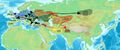 Indo-European migrations


Medical Disclaimer: WikiMD is for informational purposes only and is not a substitute for professional medical advice. Content may be inaccurate or outdated and should not be used for diagnosis or treatment. Always consult your healthcare provider for medical decisions. Verify information with trusted sources such as CDC.gov and NIH.gov. By using this site, you agree that WikiMD is not liable for any outcomes related to its content. See full disclaimer.
Credits:Most images are courtesy of Wikimedia commons, and templates, categories Wikipedia, licensed under CC BY SA or similar.
Translate page: - East Asian
中文,
日本,
한국어,
South Asian
हिन्दी,
தமிழ்,
తెలుగు,
Urdu,
ಕನ್ನಡ,
Southeast Asian
Indonesian,
Vietnamese,
Thai,
မြန်မာဘာသာ,
বাংলা
European
español,
Deutsch,
français,
Greek,
português do Brasil,
polski,
română,
русский,
Nederlands,
norsk,
svenska,
suomi,
Italian
Middle Eastern & African
عربى,
Turkish,
Persian,
Hebrew,
Afrikaans,
isiZulu,
Kiswahili,
Other
Bulgarian,
Hungarian,
Czech,
Swedish,
മലയാളം,
मराठी,
ਪੰਜਾਬੀ,
ગુજરાતી,
Portuguese,
Ukrainian

