Blood plasma
Blood plasma is the liquid component of blood in which the blood cells in whole blood are suspended. It makes up about 55% of the body's total blood volume. It is the intravascular fluid part of extracellular fluid (all body fluid outside of cells). It is mostly water (up to 95% by volume), and contains dissolved proteins (6–8%) (i.e.—serum albumins, globulins, and fibrinogen), glucose, clotting factors, electrolytes (Na+, Ca++, Mg++, HCO3−, Cl−, etc.), hormones, carbon dioxide (plasma being the main medium for excretory product transportation), and oxygen. It plays a vital role in an intravascular osmotic effect that keeps electrolyte concentration balanced and protects the body from infection and other blood disorders.
Composition[edit]
Blood plasma is a yellowish liquid component of blood that holds the blood cells of whole blood in suspension. It is the liquid part of the blood that carries cells and proteins throughout the body. It makes up about 55% of the body's total blood volume.
Functions[edit]
Blood plasma performs many functions in the body, including supplying critical proteins and nutrients, maintaining blood pressure and volume, and transporting cellular waste products.
Clinical significance[edit]
In medicine, blood plasma is used in treatments for a variety of conditions, including burns, shock and trauma patients, and those with liver failure. It can also be used to treat rare chronic conditions, such as autoimmune disorders and hemophilia.
See also[edit]
References[edit]
| Myeloid blood cells and plasma | ||||||
|---|---|---|---|---|---|---|
|
 | This hematology article is a stub. You can help WikiMD by expanding the page. |
- Blood plasma
-
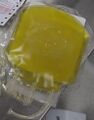 Fresh Frozen Plasma
 -
Reference ranges for blood tests - by mass
-
 Reference ranges for blood tests - by molarity
 -
Lipemic plasma
-
Private Roy W. Humphrey of Toledo, Ohio is being given blood plasma after he was wounded by shrapnel in Sicily on 8-9-43
-
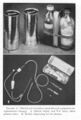 Britain and US plasma packages WWII
 -
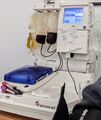 Fenwal Erythropheresis machine for plasmapheresis


Medical Disclaimer: WikiMD is for informational purposes only and is not a substitute for professional medical advice. Content may be inaccurate or outdated and should not be used for diagnosis or treatment. Always consult your healthcare provider for medical decisions. Verify information with trusted sources such as CDC.gov and NIH.gov. By using this site, you agree that WikiMD is not liable for any outcomes related to its content. See full disclaimer.
Credits:Most images are courtesy of Wikimedia commons, and templates, categories Wikipedia, licensed under CC BY SA or similar.
Translate page: - East Asian
中文,
日本,
한국어,
South Asian
हिन्दी,
தமிழ்,
తెలుగు,
Urdu,
ಕನ್ನಡ,
Southeast Asian
Indonesian,
Vietnamese,
Thai,
မြန်မာဘာသာ,
বাংলা
European
español,
Deutsch,
français,
Greek,
português do Brasil,
polski,
română,
русский,
Nederlands,
norsk,
svenska,
suomi,
Italian
Middle Eastern & African
عربى,
Turkish,
Persian,
Hebrew,
Afrikaans,
isiZulu,
Kiswahili,
Other
Bulgarian,
Hungarian,
Czech,
Swedish,
മലയാളം,
मराठी,
ਪੰਜਾਬੀ,
ગુજરાતી,
Portuguese,
Ukrainian


