Guatemalan cuisine
Guatemalan cuisine refers to the foods and culinary practices of Guatemala. Influenced by the country's Mayan and Spanish cultures, it features a variety of unique flavors and ingredients.
History[edit]
The history of Guatemalan cuisine dates back to the Maya civilization, who cultivated maize, beans, chili peppers, and other crops that remain staples in the country's cuisine today. The Spanish conquest in the 16th century introduced new ingredients and cooking methods, which combined with indigenous practices to form the basis of modern Guatemalan cuisine.
Ingredients[edit]
Key ingredients in Guatemalan cuisine include maize, beans, chili peppers, avocados, tomatoes, and a variety of fruits. Meat, particularly chicken and pork, is also commonly used. Many dishes feature a blend of these ingredients, often seasoned with herbs such as cilantro and mint.
Dishes[edit]
Guatemalan cuisine is known for its variety of dishes. These include tamales, a traditional Mesoamerican dish made of masa (a dough made from corn) that is filled with meats, cheeses, fruits, or other fillings and wrapped in a corn husk before being steamed; pepian, a spicy stew made from meat, vegetables, and spices; and fiambre, a salad served cold that can contain over 50 ingredients.
Beverages[edit]
Traditional Guatemalan beverages include atol, a warm, thick drink made from corn, and horchata, a sweet, milky drink made from rice. Coffee and tea are also popular.
Regional Variations[edit]
While there are common elements across Guatemalan cuisine, there are also regional variations. For example, the cuisine of the Peten region is heavily influenced by its proximity to the sea, with seafood featuring prominently in many dishes.
See Also[edit]
| Latin American cuisine |
|---|
|
This Latin American cuisine related article is a stub.
|

-
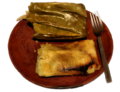 Tamale Oaxaqueño
 -
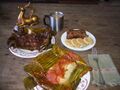 Guatemalan tamales
 -
Chicharrones, a Guatemalan dish


Medical Disclaimer: WikiMD is for informational purposes only and is not a substitute for professional medical advice. Content may be inaccurate or outdated and should not be used for diagnosis or treatment. Always consult your healthcare provider for medical decisions. Verify information with trusted sources such as CDC.gov and NIH.gov. By using this site, you agree that WikiMD is not liable for any outcomes related to its content. See full disclaimer.
Credits:Most images are courtesy of Wikimedia commons, and templates, categories Wikipedia, licensed under CC BY SA or similar.
Translate page: - East Asian
中文,
日本,
한국어,
South Asian
हिन्दी,
தமிழ்,
తెలుగు,
Urdu,
ಕನ್ನಡ,
Southeast Asian
Indonesian,
Vietnamese,
Thai,
မြန်မာဘာသာ,
বাংলা
European
español,
Deutsch,
français,
Greek,
português do Brasil,
polski,
română,
русский,
Nederlands,
norsk,
svenska,
suomi,
Italian
Middle Eastern & African
عربى,
Turkish,
Persian,
Hebrew,
Afrikaans,
isiZulu,
Kiswahili,
Other
Bulgarian,
Hungarian,
Czech,
Swedish,
മലയാളം,
मराठी,
ਪੰਜਾਬੀ,
ગુજરાતી,
Portuguese,
Ukrainian


