Chilean cuisine
Chilean cuisine refers to the traditional food and cooking practices of Chile. It is characterized by a variety of dishes stemming from the country's diverse geography and climate, as well as its history of cultural exchange and immigration.
History[edit]
Chilean cuisine has a rich history that dates back to the indigenous peoples of the region, including the Mapuche, Inca, and Atacama people. These cultures utilized local ingredients such as corn, potatoes, and quinoa in their cooking. The arrival of the Spanish colonizers in the 16th century introduced new ingredients and cooking methods, which were incorporated into the local cuisine.
Ingredients[edit]
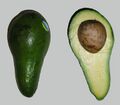
Chilean cuisine is known for its use of fresh, local ingredients. Seafood is a staple, thanks to Chile's extensive coastline. Other common ingredients include beef, chicken, corn, and a variety of fruits and vegetables. Chile is also known for its wine, particularly its Chilean red and white wines.
Dishes[edit]
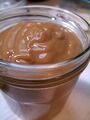
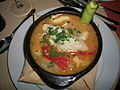
Some popular Chilean dishes include empanadas, a type of pastry filled with meat or cheese; Cazuela, a hearty stew made with meat, potatoes, and corn; and Curanto, a traditional dish from the Chiloé Archipelago that includes seafood, meat, and potatoes cooked in a hole in the ground. Desserts often feature manjar, a sweet spread similar to dulce de leche.
Influence[edit]
Chilean cuisine has influenced, and been influenced by, other cuisines around the world. It shares many similarities with other South American cuisines, particularly Argentine and Peruvian cuisine. In recent years, Chilean cuisine has gained international recognition for its unique flavors and high-quality ingredients.
See also[edit]

 | This Chile-related article is a stub. You can help WikiMD by expanding the page. |
-
 Chilean cuisine
 -
Chilean cuisine
-
Chilean cuisine
-
 Chilean cuisine
 -
Chilean cuisine
-
 Chilean cuisine
 -
 Chilean cuisine
 -
Chilean cuisine
-
Chilean cuisine
-
Chilean cuisine
-
 Chilean cuisine
 -
Chilean cuisine


Sponsored Health Resource

W8MD Weight Loss, Sleep & MedSpa
Looking for physician-supervised weight loss, semaglutide, tirzepatide, or GLP-1 receptor agonist options? W8MD helps eligible patients in New York City, Brooklyn, New Jersey, Connecticut, Pennsylvania, Delaware, and greater Philadelphia with medical weight loss, sleep medicine, and long-term maintenance support.
GLP-1 specials: Affordable GLP-1 injections NYC and Philadelphia starting from $29.99/week and up for semaglutide with insurance accepted for qualifying visits, and $45/week and up for tirzepatide with insurance accepted for qualifying visits. Self-pay options start from $59.99/week and up for semaglutide and $69.99/week and up for tirzepatide.
- Medical weight loss NYC
- Affordable GLP-1 injections NYC
- Budget GLP-1 weight loss shots Philadelphia
- New Jersey medical weight loss
- NYC medical weight loss blog
- Philadelphia weight loss blog
- Sleep medicine and sleep apnea services
- W8MD MedSpa and wellness
Book a W8MD appointment · View GLP-1 specials
Paid promotional message. Eligibility, pricing, insurance coverage, medication availability, and results vary. Medical evaluation required.

Medical Disclaimer: WikiMD is for informational purposes only and is not a substitute for professional medical advice. Content may be inaccurate or outdated and should not be used for diagnosis or treatment. Always consult your healthcare provider for medical decisions. Verify information with trusted sources such as CDC.gov and NIH.gov. By using this site, you agree that WikiMD is not liable for any outcomes related to its content. See full disclaimer.
Credits:Most images are courtesy of Wikimedia commons, and templates, categories Wikipedia, licensed under CC BY SA or similar.
Translate page: - East Asian
中文,
日本,
한국어,
South Asian
हिन्दी,
தமிழ்,
తెలుగు,
Urdu,
ಕನ್ನಡ,
Southeast Asian
Indonesian,
Vietnamese,
Thai,
မြန်မာဘာသာ,
বাংলা
European
español,
Deutsch,
français,
Greek,
português do Brasil,
polski,
română,
русский,
Nederlands,
norsk,
svenska,
suomi,
Italian
Middle Eastern & African
عربى,
Turkish,
Persian,
Hebrew,
Afrikaans,
isiZulu,
Kiswahili,
Other
Bulgarian,
Hungarian,
Czech,
Swedish,
മലയാളം,
मराठी,
ਪੰਜਾਬੀ,
ગુજરાતી,
Portuguese,
Ukrainian


