Peruvian cuisine
Peruvian cuisine refers to the traditional foods and cooking practices of Peru. It is a blend of Amerindian and Spanish food with strong influences from African, Arab, Italian, Chinese, and Japanese cooking.
Etymology[edit]
The term "Peruvian cuisine" originates from the country name "Peru". The word "Peru" is derived from Birú, a local ruler who lived near the Bay of San Miguel, Panama, in the early 16th century.
History[edit]
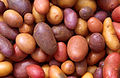
Peruvian cuisine has a history of over 5000 years, dating back to the Inca civilization. The Incas cultivated potatoes and corn, which are still staples of the cuisine. The Spanish introduced new ingredients to the region, such as beef, chicken, and rice.
In the 19th and 20th centuries, the cuisine was influenced by Italian, Chinese, and Japanese immigrants, who introduced pasta, stir-fry, and sushi techniques to Peruvian cooking.
Ingredients[edit]
Peruvian cuisine uses a variety of ingredients, including corn, potatoes, and chili peppers. Other common ingredients include quinoa, kiwicha, and a variety of fruits like lucuma and cherimoya.
Peruvian cuisine also includes a variety of meats, such as alpaca, chicken, duck, and guinea pig. Seafood is also a significant part of the cuisine due to Peru's long coastline.
Dishes[edit]
Some popular Peruvian dishes include ceviche, a seafood dish; lomo saltado, a stir-fry dish; and aji de gallina, a chicken dish.
Beverages[edit]
Peru is known for its traditional beverages, such as chicha, a fermented corn drink, and pisco, a grape brandy.
See also[edit]
References[edit]

This WikiMD article can only be edited by registered and verified editors. You can log in or register.
-
Peruvian cuisine
-
 Peruvian cuisine
 -
Peruvian cuisine
-
 Ceviche del Perú
 -
Arroz chaufa especial
-
Papa a la huancaína
-
Peruvian street food
-
Alpaca en salsa de aguaymanto
-
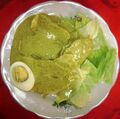 Ocopa
Ocopa -
Rocoto relleno
-
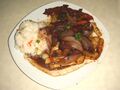 Lomo Saltado
 -
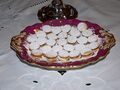 Alfajores


.JPG)


Medical Disclaimer: WikiMD is for informational purposes only and is not a substitute for professional medical advice. Content may be inaccurate or outdated and should not be used for diagnosis or treatment. Always consult your healthcare provider for medical decisions. Verify information with trusted sources such as CDC.gov and NIH.gov. By using this site, you agree that WikiMD is not liable for any outcomes related to its content. See full disclaimer.
Credits:Most images are courtesy of Wikimedia commons, and templates, categories Wikipedia, licensed under CC BY SA or similar.
Translate page: - East Asian
中文,
日本,
한국어,
South Asian
हिन्दी,
தமிழ்,
తెలుగు,
Urdu,
ಕನ್ನಡ,
Southeast Asian
Indonesian,
Vietnamese,
Thai,
မြန်မာဘာသာ,
বাংলা
European
español,
Deutsch,
français,
Greek,
português do Brasil,
polski,
română,
русский,
Nederlands,
norsk,
svenska,
suomi,
Italian
Middle Eastern & African
عربى,
Turkish,
Persian,
Hebrew,
Afrikaans,
isiZulu,
Kiswahili,
Other
Bulgarian,
Hungarian,
Czech,
Swedish,
മലയാളം,
मराठी,
ਪੰਜਾਬੀ,
ગુજરાતી,
Portuguese,
Ukrainian


