Glutathione reductase

Glutathione reductase (GR) is an enzyme that plays a critical role in protecting cells from oxidative stress by maintaining the levels of glutathione (GSH), a key antioxidant. This enzyme catalyzes the reduction of glutathione disulfide (GSSG) to the sulfhydryl form GSH, which is a crucial reaction in the glutathione cycle, a system that detoxifies reactive oxygen species (ROS) and other harmful substances.
Function[edit]
Glutathione reductase is found in nearly all living organisms, including bacteria, plants, and animals. It is located within the cytoplasm and mitochondria of cells, where it plays a vital role in cellular defense against oxidative damage. By regenerating reduced glutathione, GR helps to maintain a high GSH/GSSG ratio, which is essential for a healthy cellular redox state and for the function of other antioxidant systems.
Structure[edit]
The enzyme is typically a homodimer, meaning it consists of two identical subunits. Each subunit contains a flavin adenine dinucleotide (FAD) cofactor and a redox-active disulfide bond, which are essential for its catalytic activity. The structure of glutathione reductase allows it to efficiently catalyze the reduction of GSSG to GSH, using nicotinamide adenine dinucleotide phosphate (NADPH) as an electron donor.
Clinical Significance[edit]
Alterations in glutathione reductase activity have been linked to various diseases, including cancer, cardiovascular diseases, and neurodegenerative disorders. A deficiency in GR can lead to an accumulation of oxidative damage within cells, contributing to disease progression. Additionally, certain genetic mutations can affect the function of glutathione reductase, resulting in rare metabolic disorders such as glutathione reductase deficiency.
Genetic Regulation[edit]
The gene encoding glutathione reductase, known as GSR, is subject to complex regulatory mechanisms that ensure its expression is adjusted according to the cellular level of oxidative stress. This regulation allows cells to rapidly respond to changes in their redox environment by modulating GR activity.
Pharmacological Aspects[edit]
Due to its pivotal role in maintaining cellular redox balance, glutathione reductase has been targeted for therapeutic interventions. Inhibitors of GR have been explored as potential treatments for cancer, where the aim is to disrupt the redox homeostasis within cancer cells. Conversely, enhancing GR activity could be beneficial in diseases characterized by oxidative stress, offering a protective effect against oxidative damage.
Conclusion[edit]
Glutathione reductase is a fundamental enzyme in the antioxidant defense system, crucial for detoxifying harmful substances and maintaining cellular health. Its importance is underscored by its involvement in various diseases, making it a target for therapeutic research. Understanding the mechanisms that regulate GR activity and its interaction with other components of the antioxidant system continues to be a significant area of study in the field of biochemistry and molecular biology.
 | This medical article is a stub. You can help WikiMD by expanding the page. |
-
 Glutathione reductase scheme
 -
 Glutathione reductase model figure
 -
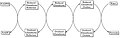 Glutathione reductase graphic
 -
 Glutathione reductase reaction figure
 -
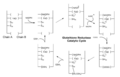 Glutathione reductase catalytic cycle


Advertise on WikiMD — 81,000+ full articles, ~900,000 total pages, ~250 million page views. Global reach, limited time promotional rates from $1/page/day. Learn more · View stats


Translate page: - East Asian
中文,
日本,
한국어,
South Asian
हिन्दी,
தமிழ்,
తెలుగు,
Urdu,
ಕನ್ನಡ,
Southeast Asian
Indonesian,
Vietnamese,
Thai,
မြန်မာဘာသာ,
বাংলা
European
español,
Deutsch,
français,
Greek,
português do Brasil,
polski,
română,
русский,
Nederlands,
norsk,
svenska,
suomi,
Italian
Middle Eastern & African
عربى,
Turkish,
Persian,
Hebrew,
Afrikaans,
isiZulu,
Kiswahili,
Other
Bulgarian,
Hungarian,
Czech,
Swedish,
മലയാളം,
मराठी,
ਪੰਜਾਬੀ,
ગુજરાતી,
Portuguese,
Ukrainian
About WikiMD • Contact • Disclaimer • Privacy • Copyright • Site statistics
Some content and images may originate from Wikimedia Commons or Wikipedia and remain subject to their stated licenses. Unless otherwise noted, eligible WikiMD content is available under CC BY-SA 4.0.
WikiMD Wellnesspedia — Free health & wellness information for patients, students, and health professionals.

