Mitochondrion
The Mitochondrion (plural mitochondria) is a double membrane-bound organelle found in most eukaryotic organisms. Some cells in some multicellular organisms may, however, lack them (for example, mature mammalian red blood cells). A number of unicellular organisms, such as microsporidia, parabasalids, and diplomonads, have also reduced or transformed their mitochondria into other structures.
Structure[edit]
Mitochondria are spherical to rod-shaped organelles that range from 1 to 10 micrometers (μm) in length. The structure of the mitochondrion is defined by an outer membrane, an intermembrane space, an inner membrane, and the matrix (space within the inner membrane).
Function[edit]
Mitochondria provide energy to the cell in which they reside. They are often referred to as the powerhouses of the cell because they generate most of the cell's supply of adenosine triphosphate (ATP), used as a source of chemical energy.
Origin[edit]
Mitochondria are thought to have originated from a symbiotic relationship between primitive eukaryotic cells and prokaryotic cells. This theory is known as the Endosymbiotic theory.
Clinical significance[edit]
Mitochondrial diseases encompass a group of disorders caused by dysfunctional mitochondria. They are the result of either inherited or spontaneous mutations in mtDNA or nDNA, which lead to altered functions of the proteins or RNA molecules that normally reside in mitochondria.
See also[edit]
- Mitochondrial DNA
- Mitochondrial disease
- Mitochondrial biogenesis
- Mitochondrial fusion
- Mitochondrial fission

This WikiMD article can only be edited by registered and verified editors. You can log in or register.
-
 Animal mitochondrion diagram
 -
 Mitochondrion CAM
 -
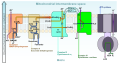 Electron transport chain
 -
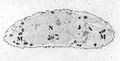 Chondrocyte calcium stain
 -
 HeLa mtGFP
 -
 ERMES
ERMES -
 The origins of mitochondrion-related organelles
 -
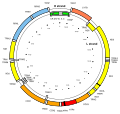 Map of the human mitochondrial genome


Sponsored Health Resource

W8MD Weight Loss, Sleep & MedSpa
Looking for physician-supervised weight loss, semaglutide, tirzepatide, or GLP-1 receptor agonist options? W8MD helps eligible patients in New York City, Brooklyn, New Jersey, Connecticut, Pennsylvania, Delaware, and greater Philadelphia with medical weight loss, sleep medicine, and long-term maintenance support.
GLP-1 specials: Affordable GLP-1 injections NYC and Philadelphia starting from $29.99/week and up for semaglutide with insurance accepted for qualifying visits, and $45/week and up for tirzepatide with insurance accepted for qualifying visits. Self-pay options start from $59.99/week and up for semaglutide and $69.99/week and up for tirzepatide.
Medical weight loss NYC | Affordable GLP-1 injections NYC | Budget GLP-1 weight loss shots Philadelphia | New Jersey medical weight loss | NYC medical weight loss | Philadelphia medical weight loss | Sleep clinic NYC | W8MD's Philadelphia GLP-1 doctor | Weight loss prescriptions NYC
Book a W8MD appointment · View GLP-1 specials
Paid promotional message. Eligibility, pricing, insurance coverage, medication availability, and results vary. Medical evaluation required.

Medical Disclaimer: WikiMD is for informational purposes only and is not a substitute for professional medical advice. Content may be inaccurate or outdated and should not be used for diagnosis or treatment. Always consult your healthcare provider for medical decisions. Verify information with trusted sources such as CDC.gov and NIH.gov. By using this site, you agree that WikiMD is not liable for any outcomes related to its content. See full disclaimer.
Credits:Most images are courtesy of Wikimedia commons, and templates, categories Wikipedia, licensed under CC BY SA or similar.
Translate page: - East Asian
中文,
日本,
한국어,
South Asian
हिन्दी,
தமிழ்,
తెలుగు,
Urdu,
ಕನ್ನಡ,
Southeast Asian
Indonesian,
Vietnamese,
Thai,
မြန်မာဘာသာ,
বাংলা
European
español,
Deutsch,
français,
Greek,
português do Brasil,
polski,
română,
русский,
Nederlands,
norsk,
svenska,
suomi,
Italian
Middle Eastern & African
عربى,
Turkish,
Persian,
Hebrew,
Afrikaans,
isiZulu,
Kiswahili,
Other
Bulgarian,
Hungarian,
Czech,
Swedish,
മലയാളം,
मराठी,
ਪੰਜਾਬੀ,
ગુજરાતી,
Portuguese,
Ukrainian

