Fluvalinate
Fluvalinate is a synthetic pyrethroid insecticide that is used extensively in the control of parasites, particularly the Varroa destructor mite, in honey bee colonies. It is a broad-spectrum insecticide that is also used against a variety of other pests in various applications.
Chemistry[edit]
Fluvalinate is a member of the pyrethroid class of synthetic insecticides. It is a complex organic compound with the chemical formula C26H22ClF3N2O3. The compound is a pale yellow solid at room temperature and is sparingly soluble in water.
Mode of Action[edit]
Fluvalinate acts on the nervous system of insects, disrupting the function of their nerve cells by delaying the closure of the sodium channels in the neurons. This results in an extended period of nerve excitation, leading to paralysis and death of the insect.
Use in Beekeeping[edit]
Fluvalinate is commonly used in beekeeping to control the Varroa destructor mite, a significant pest of honey bees. It is typically applied in the form of a strip impregnated with the insecticide, which is placed in the hive. The bees come into contact with the fluvalinate and spread it throughout the colony, killing the mites.
Safety and Toxicity[edit]
While fluvalinate is highly toxic to insects, it is generally considered to have low toxicity to mammals, including humans. However, it can cause irritation to the skin and eyes, and prolonged or repeated exposure can lead to more serious health effects. As with all pesticides, it should be used with caution and in accordance with the manufacturer's instructions.
Environmental Impact[edit]
Fluvalinate is highly toxic to fish and other aquatic organisms. It is also toxic to bees if they are directly exposed to it, although this risk is generally managed by careful application methods in beekeeping. The compound is persistent in the environment and can accumulate in soil and water bodies.
See Also[edit]
| Pest control: Insecticides | ||||||||||
|---|---|---|---|---|---|---|---|---|---|---|
|
| Beekeeping | ||||||||||
|---|---|---|---|---|---|---|---|---|---|---|
This beekeeping-related article is a stub. You can help WikiMD by expanding it.
|
 | This medical article is a stub. You can help WikiMD by expanding the page. |
-
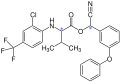 Fluvalinate
 -
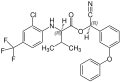 (R,R)-Fluvalinate
 -
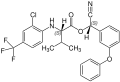 (S,S)-Fluvalinate
 -
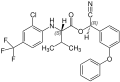 (S,R)-Fluvalinate
 -
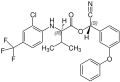 (R,S)-Fluvalinate

-Fluvalinat_Structural_Formula_V1.svg)
-Fluvalinat_Structural_Formula_V1.svg)
-Fluvalinat_Structural_Formula_V1.svg)
-Fluvalinat_Structural_Formula_V1.svg)
Sponsored Health Resource

W8MD Weight Loss, Sleep & MedSpa
Looking for physician-supervised weight loss, semaglutide, tirzepatide, or GLP-1 receptor agonist options? W8MD helps eligible patients in New York City, Brooklyn, New Jersey, Connecticut, Pennsylvania, Delaware, and greater Philadelphia with medical weight loss, sleep medicine, and long-term maintenance support.
GLP-1 specials: Affordable GLP-1 injections NYC and Philadelphia starting from $29.99/week and up for semaglutide with insurance accepted for qualifying visits, and $45/week and up for tirzepatide with insurance accepted for qualifying visits. Self-pay options start from $59.99/week and up for semaglutide and $69.99/week and up for tirzepatide.
- Medical weight loss NYC
- Affordable GLP-1 injections NYC
- Budget GLP-1 weight loss shots Philadelphia
- New Jersey medical weight loss
- NYC medical weight loss blog
- Philadelphia weight loss blog
- Sleep medicine and sleep apnea services
- W8MD MedSpa and wellness
Book a W8MD appointment · View GLP-1 specials
Paid promotional message. Eligibility, pricing, insurance coverage, medication availability, and results vary. Medical evaluation required.

Medical Disclaimer: WikiMD is for informational purposes only and is not a substitute for professional medical advice. Content may be inaccurate or outdated and should not be used for diagnosis or treatment. Always consult your healthcare provider for medical decisions. Verify information with trusted sources such as CDC.gov and NIH.gov. By using this site, you agree that WikiMD is not liable for any outcomes related to its content. See full disclaimer.
Credits:Most images are courtesy of Wikimedia commons, and templates, categories Wikipedia, licensed under CC BY SA or similar.
Translate page: - East Asian
中文,
日本,
한국어,
South Asian
हिन्दी,
தமிழ்,
తెలుగు,
Urdu,
ಕನ್ನಡ,
Southeast Asian
Indonesian,
Vietnamese,
Thai,
မြန်မာဘာသာ,
বাংলা
European
español,
Deutsch,
français,
Greek,
português do Brasil,
polski,
română,
русский,
Nederlands,
norsk,
svenska,
suomi,
Italian
Middle Eastern & African
عربى,
Turkish,
Persian,
Hebrew,
Afrikaans,
isiZulu,
Kiswahili,
Other
Bulgarian,
Hungarian,
Czech,
Swedish,
മലയാളം,
मराठी,
ਪੰਜਾਬੀ,
ગુજરાતી,
Portuguese,
Ukrainian

