Phosphate
Overview of phosphate use in biological systems and industry


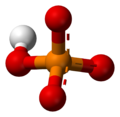
Phosphate is an inorganic chemical and a salt of phosphoric acid. In organic chemistry, a phosphate, or organophosphate, is an ester of phosphoric acid. Phosphates are essential for life, playing a critical role in biochemistry and ecology.
Biological Importance
Phosphates are vital components of DNA, RNA, ATP, and phospholipids, which form all cell membranes. They are involved in energy transfer through the formation of high-energy phosphate bonds in adenosine triphosphate (ATP) and guanosine triphosphate (GTP). Phosphates also play a crucial role in cell signaling as part of phosphorylation processes.
DNA and RNA
Phosphates form the backbone of DNA and RNA molecules, linking together the nucleotides in a chain through phosphodiester bonds. This structure is essential for the stability and function of genetic material.
Energy Transfer
ATP, the primary energy carrier in cells, contains three phosphate groups. The hydrolysis of the terminal phosphate group releases energy that is used in various cellular processes, including muscle contraction, nerve impulse propagation, and biosynthesis.
Cell Signaling
Phosphorylation, the addition of a phosphate group to a protein or other organic molecule, is a common mechanism for regulating protein function and signaling pathways. This process is mediated by enzymes known as kinases and is reversed by phosphatases.
Industrial and Agricultural Use
Phosphates are widely used in agriculture as fertilizers. They are a key component of superphosphate and triple superphosphate fertilizers, which are used to enhance soil fertility and crop yield. In industry, phosphates are used in the production of detergents, food additives, and water treatment chemicals.
Fertilizers
Phosphate fertilizers are essential for modern agriculture. They provide phosphorus, a critical nutrient that plants need for growth and development. The use of phosphate fertilizers has significantly increased agricultural productivity worldwide.
Detergents
Phosphates are used in detergents to soften water and enhance cleaning efficiency. However, their use has been reduced in many countries due to environmental concerns, as phosphates can contribute to eutrophication in water bodies.
Food Additives
In the food industry, phosphates are used as leavening agents, acidity regulators, and emulsifiers. They help maintain the texture and stability of processed foods.
Environmental Impact
The excessive use of phosphate fertilizers and detergents can lead to environmental issues such as eutrophication, which is the over-enrichment of water bodies with nutrients. This can cause algal blooms, deplete oxygen levels, and harm aquatic life.
Also see
| Branches of chemistry | ||||||||||
|---|---|---|---|---|---|---|---|---|---|---|
|
| Biochemistry | ||||||||||
|---|---|---|---|---|---|---|---|---|---|---|
This biochemistry related article is a stub.
|
-
 Phosphate
 -
 Phosphate
 -
 Phosphate
 -
 Phosphate
 -
 Phosphate
 -
 Phosphate
 -
 Phosphate
 -
 Phosphate
 -
 Phosphate
 -
 Phosphate


.png)

Ad. Transform your life with W8MD's
GLP-1 weight loss injections special from $29.99 with insurance
|
WikiMD Medical Encyclopedia |
Medical Disclaimer: WikiMD is for informational purposes only and is not a substitute for professional medical advice. Content may be inaccurate or outdated and should not be used for diagnosis or treatment. Always consult your healthcare provider for medical decisions. Verify information with trusted sources such as CDC.gov and NIH.gov. By using this site, you agree that WikiMD is not liable for any outcomes related to its content. See full disclaimer.
Credits:Most images are courtesy of Wikimedia commons, and templates, categories Wikipedia, licensed under CC BY SA or similar.
Translate this page: - East Asian
中文,
日本,
한국어,
South Asian
हिन्दी,
தமிழ்,
తెలుగు,
Urdu,
ಕನ್ನಡ,
Southeast Asian
Indonesian,
Vietnamese,
Thai,
မြန်မာဘာသာ,
বাংলা
European
español,
Deutsch,
français,
Greek,
português do Brasil,
polski,
română,
русский,
Nederlands,
norsk,
svenska,
suomi,
Italian
Middle Eastern & African
عربى,
Turkish,
Persian,
Hebrew,
Afrikaans,
isiZulu,
Kiswahili,
Other
Bulgarian,
Hungarian,
Czech,
Swedish,
മലയാളം,
मराठी,
ਪੰਜਾਬੀ,
ગુજરાતી,
Portuguese,
Ukrainian
