Hemp: Difference between revisions
No edit summary |
CSV import |
||
| Line 76: | Line 76: | ||
{{Sustainable development}} | {{Sustainable development}} | ||
{{Stb}} | {{Stb}} | ||
<gallery> | |||
File:La_Roche_Jagu_chanvre_1.JPG|La Roche Jagu chanvre 1 | |||
File:Drone_video_of_a_maze_in_a_hemp_field_in_Kanepi_parish,_Estonia_(August_2022).webm|Drone video of a maze in a hemp field in Kanepi parish, Estonia (August 2022) | |||
File:Hemp_bunch-dried_out_-seeds_close_up_PNr°0063.jpg|Hemp bunch dried out seeds close up | |||
File:hempseed.jpg|Hemp seed | |||
File:HempSeed.jpg|Hemp Seed | |||
File:Konopne_seminko_loupane.jpg|Konopne seminko loupane | |||
File:Hanfstengel.jpg|Hanfstengel | |||
File:Hemp-600x600.jpg|Hemp | |||
</gallery> | |||
Latest revision as of 11:53, 25 February 2025
.JPG)
Hemp is a variety of the Cannabis sativa plant species grown specifically for industrial uses such as textiles, paper, biodegradable plastics, and fuel. Unlike marijuana, another variety of Cannabis sativa, hemp contains only trace amounts of THC (tetrahydrocannabinol), the psychoactive compound responsible for producing a "high." Hemp has been cultivated globally for thousands of years and is recognized for its versatility and environmental benefits.
History[edit]
Hemp has a long and rich history as one of the earliest plants cultivated by humans:
- In ancient China, hemp was used to make paper, textiles, and rope as early as 2800 BCE.
- In ancient India, hemp was considered sacred and utilized for medicinal purposes and religious rituals.
- European colonists introduced hemp to North America in the 1600s, where it became a staple crop in early settlements. Hemp was used to produce sailcloth, parchment, and rope, and it was even accepted as a form of currency in some regions.
- During the 20th century, hemp cultivation declined due to competition from synthetic materials and restrictions on Cannabis cultivation. However, renewed interest in hemp's sustainability and versatility has revived its global production.
Uses[edit]
Hemp serves a wide array of purposes in industry and agriculture:
- Textiles: Hemp fibers are strong, durable, and ideal for making clothing, bags, carpets, and upholstery.
- Paper: Hemp paper is more sustainable than wood-based paper, requiring fewer chemicals and less water in its production.
- Biodegradable plastics: Hemp can be processed into biodegradable plastic alternatives, reducing plastic pollution.
- Fuel: Hemp can be converted into biofuels, such as biodiesel and ethanol, offering renewable alternatives to fossil fuels.
- Food products: Hemp seeds are highly nutritious and can be processed into hemp milk, hemp oil, and hemp protein powder.
- Construction: Hempcrete, a material made from hemp hurds and lime, is used for sustainable building.
Legal Status[edit]
The legal status of hemp varies globally:
- In the United States, the 2018 Farm Bill legalized hemp cultivation for industrial purposes, provided the THC content remains below 0.3%.
- Canada has permitted hemp cultivation since 1998, and it is widely grown for both industrial and nutritional uses.
- In the European Union, hemp is regulated but legal, with restrictions on THC levels varying by country.
Health Benefits[edit]
Hemp offers numerous nutritional and therapeutic benefits:
- Hemp seeds are rich in protein, omega-3 fatty acids, and fiber and contain essential nutrients like vitamin E, magnesium, and zinc.
- CBD (cannabidiol) extracted from hemp has been studied for its potential in treating conditions like chronic pain, anxiety, and epilepsy.
- Hemp oil, made from seeds, is used in skincare for its moisturizing properties.
Cultivation[edit]
Hemp is a resilient crop that thrives in diverse climates and soils:
- It requires fewer pesticides and herbicides than many other crops.
- Hemp is drought-resistant and demands less water than crops like cotton.
- The plant's deep roots help prevent soil erosion and improve soil health.
Varieties[edit]
There are several varieties of hemp cultivated for specific purposes:
- Industrial hemp: Grown for fiber production used in textiles, rope, and paper.
- Seed hemp: Cultivated for hemp seeds used in food products and oil extraction.
- CBD hemp: Bred for high CBD content for use in medicinal and therapeutic applications.
Challenges[edit]
Despite its benefits, hemp cultivation faces challenges:
- The stigma associated with Cannabis limits its acceptance in some regions.
- Lack of infrastructure for processing hemp products can hinder market growth.
- Regulatory hurdles and varying laws regarding THC levels create challenges for global trade.
Environmental Impact[edit]
Hemp is regarded as an environmentally friendly crop:
- It sequesters large amounts of carbon dioxide, contributing to carbon neutrality.
- Hemp-based products, like biodegradable plastics and hempcrete, promote sustainable alternatives to environmentally harmful materials.
Conclusion[edit]
Hemp is a versatile and sustainable plant with a wide range of applications in industry, agriculture, and healthcare. As global awareness of its environmental and economic benefits grows, hemp is poised to play an increasingly important role in sustainable development.
References[edit]
<references group="" responsive="1"></references>
External Links[edit]
| Cannabis | ||||||||||||||
|---|---|---|---|---|---|---|---|---|---|---|---|---|---|---|
*
|
| This article is a stub. You can help WikiMD by registering to expand it. |
-
 La Roche Jagu chanvre 1
 -
 Drone video of a maze in a hemp field in Kanepi parish, Estonia (August 2022)
 -
 Hemp bunch dried out seeds close up
 -
 Hemp seed
 -
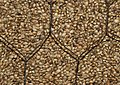 Hemp Seed
 -
 Konopne seminko loupane
 -
 Hanfstengel
 -
 Hemp
Hemp


