Sinigang
Sinigang is a popular Filipino soup or stew that is characterized by its sour and savory flavor. It is one of the most common dishes in the Philippines and is considered a comfort food for many Filipinos.
Ingredients[edit]
Sinigang is typically made with meat, often pork, beef, fish, or shrimp, and a variety of vegetables. The souring agent, which gives sinigang its distinctive taste, can be a variety of fruits or plants such as tamarind, kamias, tomato, guava, or even rhubarb. Other ingredients may include okra, water spinach, radish, and eggplant.
Variations[edit]
There are many variations of sinigang, depending on the region in the Philippines. The choice of meat and souring agent can vary widely. For example, in the Visayas region, they often use batwan as the souring agent. In Mindanao, they use tabon-tabon and libas.
Preparation[edit]
The meat is first sautéed with garlic, onion, and tomato. Then, water, the souring agent, and other ingredients are added. The dish is simmered until the meat is tender and the flavors are well blended.
Cultural Significance[edit]
Sinigang is more than just a dish in the Philippines. It is a part of the Filipino identity and culture. It is often served during family gatherings and special occasions. It is also a popular dish in Filipino restaurants around the world.
See Also[edit]


-
 Sinigang na Baboy
 -
 Fish Sinigang
 -
 Sinigang with Guava
 -
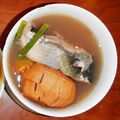 Sinigang with Milkfish and Santol
 -
 Sinigang
 -
 Sinigang


.jpg)


Advertise on WikiMD — 81,000+ full articles, ~900,000 total pages, ~250 million page views. Global reach, limited time promotional rates from $1/page/day. Learn more · View stats

Translate page: - East Asian
中文,
日本,
한국어,
South Asian
हिन्दी,
தமிழ்,
తెలుగు,
Urdu,
ಕನ್ನಡ,
Southeast Asian
Indonesian,
Vietnamese,
Thai,
မြန်မာဘာသာ,
বাংলা
European
español,
Deutsch,
français,
Greek,
português do Brasil,
polski,
română,
русский,
Nederlands,
norsk,
svenska,
suomi,
Italian
Middle Eastern & African
عربى,
Turkish,
Persian,
Hebrew,
Afrikaans,
isiZulu,
Kiswahili,
Other
Bulgarian,
Hungarian,
Czech,
Swedish,
മലയാളം,
मराठी,
ਪੰਜਾਬੀ,
ગુજરાતી,
Portuguese,
Ukrainian
About WikiMD • Contact • Disclaimer • Privacy • Copyright • Site statistics
Some content and images may originate from Wikimedia Commons or Wikipedia and remain subject to their stated licenses. Unless otherwise noted, eligible WikiMD content is available under CC BY-SA 4.0.
WikiMD Wellnesspedia — Free health & wellness information for patients, students, and health professionals.

