Sievert
Sievert (symbol: Sv) is a derived unit of ionizing radiation dose in the International System of Units (SI) and is a measure of the health effect of low levels of ionizing radiation on the human body. The sievert is of fundamental importance in dosimetry and radiation protection, and is named after Rolf Maximilian Sievert, a Swedish medical physicist renowned for work on radiation dosage measurement and research into the biological effects of radiation.
Definition[edit]
Quantities that are measured in sieverts are intended to represent the stochastic health risk, which for radiation dose assessment is defined as the probability of cancer induction and genetic damage. One sievert carries with it a 5.5% chance of eventually developing cancer based on the linear no-threshold model (LNT).
Usage[edit]
The sievert is used for radiation dose quantities such as equivalent dose, effective dose, and committed dose. It is used to quantify the risk of radiation-induced health effects from low levels of ionizing radiation to the human body, which is not to be confused with the physical quantity absorbed dose measured by the unit gray.
Derivatives[edit]
Special names are given to derived units of the sievert, which are typically used in the measurement of dose equivalent. These include the millisievert (mSv), which is one thousandth of a sievert, and the microsievert (μSv), which is one millionth of a sievert.
See also[edit]
References[edit]
| Radiation (physics and health) | ||||||||
|---|---|---|---|---|---|---|---|---|
|
| SI units | ||||||||
|---|---|---|---|---|---|---|---|---|
* Category
|

This WikiMD article can only be edited by registered and verified editors. You can log in or register.
-
 展望の宿 天神 2016
 -
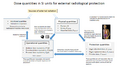 Dose quantities and units
 -
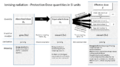 SI Radiation dose units
 -
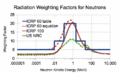 Neutron radiation weighting factor as a function of kinetic energy
 -
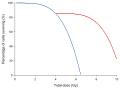 Effect of self-repair
 -
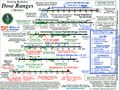 Dose ranges in sievert
 -
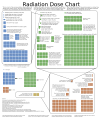 Exposure chart XKCD
 -
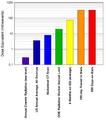 Comparisons of Radiation Exposure Mars Trip
 -
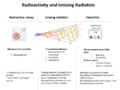 Radioactivity and radiation
.jpg)


Medical Disclaimer: WikiMD is for informational purposes only and is not a substitute for professional medical advice. Content may be inaccurate or outdated and should not be used for diagnosis or treatment. Always consult your healthcare provider for medical decisions. Verify information with trusted sources such as CDC.gov and NIH.gov. By using this site, you agree that WikiMD is not liable for any outcomes related to its content. See full disclaimer.
Credits:Most images are courtesy of Wikimedia commons, and templates, categories Wikipedia, licensed under CC BY SA or similar.
Translate page: - East Asian
中文,
日本,
한국어,
South Asian
हिन्दी,
தமிழ்,
తెలుగు,
Urdu,
ಕನ್ನಡ,
Southeast Asian
Indonesian,
Vietnamese,
Thai,
မြန်မာဘာသာ,
বাংলা
European
español,
Deutsch,
français,
Greek,
português do Brasil,
polski,
română,
русский,
Nederlands,
norsk,
svenska,
suomi,
Italian
Middle Eastern & African
عربى,
Turkish,
Persian,
Hebrew,
Afrikaans,
isiZulu,
Kiswahili,
Other
Bulgarian,
Hungarian,
Czech,
Swedish,
മലയാളം,
मराठी,
ਪੰਜਾਬੀ,
ગુજરાતી,
Portuguese,
Ukrainian

