Sialoglycoprotein
Sialoglycoprotein is a type of glycoprotein that is characterized by the presence of sialic acid residues. These proteins are found in abundance on the surface of cells, particularly in the plasma membrane. They play a crucial role in various biological processes, including cell adhesion, signal transduction, and immune response.
Structure[edit]
Sialoglycoproteins are composed of a protein backbone to which one or more carbohydrate chains are attached. These chains are terminated by sialic acid residues, which give the proteins their characteristic properties. The structure of sialoglycoproteins can vary greatly depending on the type and arrangement of the carbohydrate chains and the nature of the protein backbone.
Function[edit]
Sialoglycoproteins are involved in a wide range of biological processes. They play a key role in cell adhesion, helping cells stick to each other and to the extracellular matrix. This is important for tissue integrity and cell migration. Sialoglycoproteins are also involved in signal transduction, transmitting signals from the cell surface to the interior of the cell. In addition, they play a role in the immune response, helping the body recognize and respond to foreign substances.
Clinical significance[edit]
Alterations in the structure or function of sialoglycoproteins can lead to a variety of diseases. For example, changes in the sialic acid content of glycoproteins have been implicated in cancer and inflammatory diseases. In addition, certain viruses and bacteria can bind to sialoglycoproteins on the cell surface, facilitating their entry into the cell. This makes sialoglycoproteins a potential target for therapeutic interventions.
See also[edit]
 | This cell biology article is a stub. You can help WikiMD by expanding the page. |
 | This medical article is a stub. You can help WikiMD by expanding the page. |
Sialoglycoprotein[edit]
-
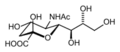 Sialic acid

Advertise on WikiMD — 81,000+ full articles, ~900,000 total pages, ~250 million page views. Global reach, limited time promotional rates from $1/page/day. Learn more · View stats

Medical Disclaimer: WikiMD is for informational purposes only and is not a substitute for professional medical advice. Content may be inaccurate or outdated and should not be used for diagnosis or treatment. Always consult your healthcare provider for medical decisions. Verify information with trusted sources such as CDC.gov and NIH.gov. By using this site, you agree that WikiMD is not liable for any outcomes related to its content. See full disclaimer.
Credits:Most images are courtesy of Wikimedia commons, and templates, categories Wikipedia, licensed under CC BY SA or similar.
Translate page: - East Asian
中文,
日本,
한국어,
South Asian
हिन्दी,
தமிழ்,
తెలుగు,
Urdu,
ಕನ್ನಡ,
Southeast Asian
Indonesian,
Vietnamese,
Thai,
မြန်မာဘာသာ,
বাংলা
European
español,
Deutsch,
français,
Greek,
português do Brasil,
polski,
română,
русский,
Nederlands,
norsk,
svenska,
suomi,
Italian
Middle Eastern & African
عربى,
Turkish,
Persian,
Hebrew,
Afrikaans,
isiZulu,
Kiswahili,
Other
Bulgarian,
Hungarian,
Czech,
Swedish,
മലയാളം,
मराठी,
ਪੰਜਾਬੀ,
ગુજરાતી,
Portuguese,
Ukrainian

