Mint chocolate
Mint chocolate is a popular variety of flavored chocolate, made by adding mint flavoring, such as peppermint, spearmint, or creme de menthe, to plain chocolate. Mint chocolate can be found in a wide variety of edible products, such as candies, cookies, desserts, and beverages.
History[edit]
The combination of mint and chocolate dates back to the 19th century, and is attributed to the United Kingdom. The first mint chocolate candy was introduced by Fry’s, a British chocolate company, in 1885. The product, known as Fry’s Chocolate Cream, was a peppermint fondant center enrobed in dark chocolate.
Varieties[edit]
There are several varieties of mint chocolate, which can be categorized based on the type of chocolate used (dark, milk, or white), the type of mint flavoring, and the format of the product (bar, chip, or liquid).
Mint Chocolate Chip[edit]
Mint chocolate chip is a popular flavor of ice cream, with the mint flavoring and small chocolate chips. It is characterized by its green color, which is achieved by adding food coloring.
After Eight[edit]
After Eight is a brand of thin, square mint chocolate candies, produced by Nestlé. The candies are enrobed in dark chocolate and have a peppermint fondant center.
Uses[edit]
Mint chocolate is used in a variety of culinary applications. It is a popular flavor for desserts, including ice cream, cookies, and cakes. It is also used in beverages, such as hot chocolate and coffee drinks.
Health Benefits[edit]
While mint chocolate is often consumed for its flavor, it also has several potential health benefits. Dark chocolate is rich in antioxidants, and mint has been associated with improved digestion and reduced headache symptoms.
See Also[edit]
| Candy | ||||||||||
|---|---|---|---|---|---|---|---|---|---|---|
|

- Mint_chocolate
-
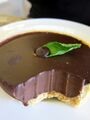 Chocolate mint ganache
 -
Marianne karkki
.jpg)
Advertise on WikiMD — 81,000+ full articles, ~900,000 total pages, ~250 million page views. Global reach, limited time promotional rates from $1/page/day. Learn more · View stats

Translate page: - East Asian
中文,
日本,
한국어,
South Asian
हिन्दी,
தமிழ்,
తెలుగు,
Urdu,
ಕನ್ನಡ,
Southeast Asian
Indonesian,
Vietnamese,
Thai,
မြန်မာဘာသာ,
বাংলা
European
español,
Deutsch,
français,
Greek,
português do Brasil,
polski,
română,
русский,
Nederlands,
norsk,
svenska,
suomi,
Italian
Middle Eastern & African
عربى,
Turkish,
Persian,
Hebrew,
Afrikaans,
isiZulu,
Kiswahili,
Other
Bulgarian,
Hungarian,
Czech,
Swedish,
മലയാളം,
मराठी,
ਪੰਜਾਬੀ,
ગુજરાતી,
Portuguese,
Ukrainian
About WikiMD • Contact • Disclaimer • Privacy • Copyright • Site statistics
Some content and images may originate from Wikimedia Commons or Wikipedia and remain subject to their stated licenses. Unless otherwise noted, eligible WikiMD content is available under CC BY-SA 4.0.
WikiMD Wellnesspedia — Free health & wellness information for patients, students, and health professionals.


