List of Palestinian dishes
List of Palestinian Dishes is a compilation of traditional meals, snacks, and desserts that originate from the Palestinian region. These dishes are a significant part of the Palestinian culture and are often served during holidays, family gatherings, and special occasions.
Traditional Palestinian Dishes[edit]
Main Dishes[edit]
- Maqluba - A traditional Palestinian dish that consists of meat, rice, and fried vegetables placed in a pot, which is then flipped upside down when served, hence the name maqluba, which translates literally as "upside-down".
- Mansaf - A traditional dish made of lamb cooked in a sauce of fermented dried yogurt and served with rice or bulgur. It is often considered the national dish of Palestine.
- Musakhan - A roasted chicken baked with onions, sumac, allspice, saffron, and fried pine nuts served over taboon bread.
Side Dishes[edit]
- Tabbouleh - A vegetarian salad made mostly of finely chopped parsley, with tomatoes, mint, onion, bulgur, and seasoned with olive oil, lemon juice, salt and pepper.
- Hummus - A spread made from cooked, mashed chickpeas blended with tahini, lemon juice, and garlic.
- Falafel - Deep-fried balls or patties made from ground chickpeas, fava beans, or both.
Desserts[edit]
- Knafeh - A traditional Palestinian dessert made with thin noodle-like pastry, or alternatively fine semolina dough, soaked in sweet, sugar-based syrup, and typically layered with cheese, or with other ingredients such as clotted cream or nuts.
- Baklava - A rich, sweet dessert pastry made of layers of filo filled with chopped nuts and sweetened and held together with syrup or honey.
See Also[edit]
This Middle Eastern food related article is a stub. You can help WikiMD by expanding it.
List of Palestinian dishes[edit]
-
Palestine breakfast
-
Makluba
-
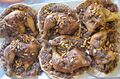 Mushakhan Dish
 -
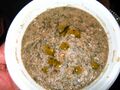 Sumaghiyyeh
 -
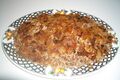 Mujaddara
 -
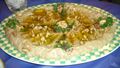 Baba Ghanoush
 -
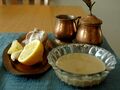 Tahina
 -
Kalayat Bandura


Advertise on WikiMD — 81,000+ full articles, ~900,000 total pages, ~250 million page views. Global reach, limited time promotional rates from $1/page/day. Learn more · View stats

Translate page: - East Asian
中文,
日本,
한국어,
South Asian
हिन्दी,
தமிழ்,
తెలుగు,
Urdu,
ಕನ್ನಡ,
Southeast Asian
Indonesian,
Vietnamese,
Thai,
မြန်မာဘာသာ,
বাংলা
European
español,
Deutsch,
français,
Greek,
português do Brasil,
polski,
română,
русский,
Nederlands,
norsk,
svenska,
suomi,
Italian
Middle Eastern & African
عربى,
Turkish,
Persian,
Hebrew,
Afrikaans,
isiZulu,
Kiswahili,
Other
Bulgarian,
Hungarian,
Czech,
Swedish,
മലയാളം,
मराठी,
ਪੰਜਾਬੀ,
ગુજરાતી,
Portuguese,
Ukrainian
About WikiMD • Contact • Disclaimer • Privacy • Copyright • Site statistics
Some content and images may originate from Wikimedia Commons or Wikipedia and remain subject to their stated licenses. Unless otherwise noted, eligible WikiMD content is available under CC BY-SA 4.0.
WikiMD Wellnesspedia — Free health & wellness information for patients, students, and health professionals.


