Harmine
Harmine is a beta-carboline alkaloid found in several different plants, most notably the Middle Eastern plant Peganum harmala (Syrian rue) and the South American vine Banisteriopsis caapi (ayahuasca). It has been used for centuries in traditional medicine and spiritual practices for its psychoactive effects.
History[edit]
Harmine was first isolated in 1841 from Peganum harmala by the chemist Göbel. It was named after the plant from which it was extracted. The chemical structure of harmine was elucidated in the early 20th century by chemists including Robert Robinson and Albert Hofmann.
Chemistry[edit]
Harmine is a beta-carboline alkaloid, meaning it is composed of a three-ring structure with two benzene rings fused to a pyridine ring. It is a fluorescent compound, emitting blue light when exposed to ultraviolet light. Harmine is soluble in organic solvents such as ethanol and DMSO, but is relatively insoluble in water.
Pharmacology[edit]
Harmine acts as a reversible inhibitor of monoamine oxidase A (MAO-A), an enzyme that breaks down monoamines such as serotonin and dopamine. By inhibiting MAO-A, harmine can increase the levels of these neurotransmitters in the brain. This is thought to contribute to its psychoactive effects.
Harmine also binds to benzodiazepine receptors in the brain, which may contribute to its anxiolytic (anti-anxiety) effects. In addition, it has been found to stimulate the production of brain-derived neurotrophic factor (BDNF), a protein that promotes the growth and survival of neurons.
Uses[edit]
Harmine has been used in traditional medicine for its psychoactive and potential therapeutic effects. It is a key ingredient in the South American hallucinogenic brew ayahuasca, used in spiritual and healing ceremonies. In traditional medicine, it has been used to treat a variety of conditions, including depression, anxiety, and Parkinson's disease.
Safety[edit]
While harmine is generally considered safe at traditional doses, it can cause a range of side effects, including nausea, vomiting, and hallucinations. It can also interact with other drugs, particularly those that affect the serotonin system, such as SSRIs and MAOIs.
Research[edit]
Research into the potential therapeutic effects of harmine is ongoing. Some studies have suggested that it may have potential as a treatment for depression and anxiety, while others have explored its potential use in treating Parkinson's disease and cancer.
| Psychoactive substances | ||||||||||
|---|---|---|---|---|---|---|---|---|---|---|
This psychoactive substance-related article is a stub.
|
 | This medical article is a stub. You can help WikiMD by expanding the page. |
Harmine gallery[edit]
-
Harmine Biosynthesis
-
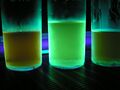 Harmaline and Harmine

Advertise on WikiMD — 81,000+ full articles, ~900,000 total pages, ~250 million page views. Global reach, limited time promotional rates from $1/page/day. Learn more · View stats


Translate page: - East Asian
中文,
日本,
한국어,
South Asian
हिन्दी,
தமிழ்,
తెలుగు,
Urdu,
ಕನ್ನಡ,
Southeast Asian
Indonesian,
Vietnamese,
Thai,
မြန်မာဘာသာ,
বাংলা
European
español,
Deutsch,
français,
Greek,
português do Brasil,
polski,
română,
русский,
Nederlands,
norsk,
svenska,
suomi,
Italian
Middle Eastern & African
عربى,
Turkish,
Persian,
Hebrew,
Afrikaans,
isiZulu,
Kiswahili,
Other
Bulgarian,
Hungarian,
Czech,
Swedish,
മലയാളം,
मराठी,
ਪੰਜਾਬੀ,
ગુજરાતી,
Portuguese,
Ukrainian
About WikiMD • Contact • Disclaimer • Privacy • Copyright • Site statistics
Some content and images may originate from Wikimedia Commons or Wikipedia and remain subject to their stated licenses. Unless otherwise noted, eligible WikiMD content is available under CC BY-SA 4.0.
WikiMD Wellnesspedia — Free health & wellness information for patients, students, and health professionals.


