Gymnema sylvestre
Gymnema sylvestre is a woody climbing shrub native to the tropical forests of India, Africa, and Australia. It is known for its medicinal properties and is used in Ayurvedic medicine, a traditional Indian system of medicine. The plant's leaves are used to make herbal tea and extracts, which are believed to have several health benefits.
Description[edit]
Gymnema sylvestre is a perennial woody vine that grows up to 3 meters in height. Its leaves are elliptic, opposite, and decussate. The flowers are small, yellow, and in umbellate cymes. The fruit is a follicle and contains numerous seeds.
Uses[edit]
The leaves of Gymnema sylvestre are used in Ayurvedic medicine to treat a variety of conditions. They are most commonly used for the treatment of diabetes, as they are believed to help regulate blood sugar levels. The leaves are also used to treat malaria, cough, and snake bites. In addition, they are used as a laxative, diuretic, and appetite suppressant.
Active Compounds[edit]
The primary active compounds in Gymnema sylvestre are a group of saponins known as gymnemic acids. These compounds are believed to have several medicinal properties, including the ability to suppress the taste of sweetness, which may help to reduce cravings for sugary foods.
Research[edit]
While there is some scientific evidence to support the use of Gymnema sylvestre for the treatment of diabetes, more research is needed to confirm these findings and to fully understand how the plant works. Some studies have also suggested that Gymnema sylvestre may have potential as a weight loss aid, but again, more research is needed in this area.
Cultivation[edit]
Gymnema sylvestre is a tropical plant and requires a warm climate to grow. It prefers well-drained soil and partial to full sun. The plant can be propagated from seeds or cuttings.
See Also[edit]
| Medicinal plants | ||||||||
|---|---|---|---|---|---|---|---|---|
This medicinal plants related article is a stub.
|
| Ayurveda | ||||||||||
|---|---|---|---|---|---|---|---|---|---|---|
|

Gymnema sylvestre gallery[edit]
-
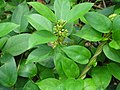 Gymnema sylvestre R.Br - Flickr - lalithamba
 -
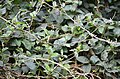 Gymnema sylvestre DSC 6920


Sponsored Health Resource

W8MD Weight Loss, Sleep & MedSpa
Looking for physician-supervised weight loss, semaglutide, tirzepatide, or GLP-1 receptor agonist options? W8MD helps eligible patients in New York City, Brooklyn, New Jersey, Connecticut, Pennsylvania, Delaware, and greater Philadelphia with medical weight loss, sleep medicine, and long-term maintenance support.
GLP-1 specials: Affordable GLP-1 injections NYC and Philadelphia starting from $29.99/week and up for semaglutide with insurance accepted for qualifying visits, and $45/week and up for tirzepatide with insurance accepted for qualifying visits. Self-pay options start from $59.99/week and up for semaglutide and $69.99/week and up for tirzepatide.
- Medical weight loss NYC
- Affordable GLP-1 injections NYC
- Budget GLP-1 weight loss shots Philadelphia
- New Jersey medical weight loss
- NYC medical weight loss blog
- Philadelphia weight loss blog
- Sleep medicine and sleep apnea services
- W8MD MedSpa and wellness
Book a W8MD appointment · View GLP-1 specials
Paid promotional message. Eligibility, pricing, insurance coverage, medication availability, and results vary. Medical evaluation required.

Medical Disclaimer: WikiMD is for informational purposes only and is not a substitute for professional medical advice. Content may be inaccurate or outdated and should not be used for diagnosis or treatment. Always consult your healthcare provider for medical decisions. Verify information with trusted sources such as CDC.gov and NIH.gov. By using this site, you agree that WikiMD is not liable for any outcomes related to its content. See full disclaimer.
Credits:Most images are courtesy of Wikimedia commons, and templates, categories Wikipedia, licensed under CC BY SA or similar.
Translate page: - East Asian
中文,
日本,
한국어,
South Asian
हिन्दी,
தமிழ்,
తెలుగు,
Urdu,
ಕನ್ನಡ,
Southeast Asian
Indonesian,
Vietnamese,
Thai,
မြန်မာဘာသာ,
বাংলা
European
español,
Deutsch,
français,
Greek,
português do Brasil,
polski,
română,
русский,
Nederlands,
norsk,
svenska,
suomi,
Italian
Middle Eastern & African
عربى,
Turkish,
Persian,
Hebrew,
Afrikaans,
isiZulu,
Kiswahili,
Other
Bulgarian,
Hungarian,
Czech,
Swedish,
മലയാളം,
मराठी,
ਪੰਜਾਬੀ,
ગુજરાતી,
Portuguese,
Ukrainian

