Dondurma
Dondurma is a traditional Turkish ice cream, known for its unique texture and resistance to melting. It is made from milk, sugar, salep, and mastic.
History[edit]
The history of Dondurma dates back to the Ottoman Empire. It is believed to have been introduced to Turkey in the 17th century. The word "Dondurma" means "freezing" in Turkish, referring to the freezing process of the ice cream.
Ingredients[edit]
The main ingredients of Dondurma are milk, sugar, salep, and mastic. Salep, a flour made from the tubers of the orchid genus Orchis, gives the ice cream its elasticity and smooth texture. Mastic, a resin, imparts a chewy consistency.
Preparation[edit]
Dondurma is traditionally made by mixing the ingredients in a large metal container, which is then chilled and vigorously stirred. The mixture is then beaten with long metal rods to incorporate air and ensure a smooth texture. This process, known as kneading, also helps to develop the characteristic elasticity of the ice cream.
Serving[edit]
Dondurma is typically served in a cone or on a stick, but it can also be served in a bowl or as part of a dessert. It is often garnished with ground pistachios. In Turkey, it is common to see vendors performing tricks with the ice cream, such as spinning it around or pretending to drop it, due to its firm and stretchy texture.
Varieties[edit]
There are many varieties of Dondurma, with flavors ranging from traditional vanilla and chocolate to more exotic flavors like rose, pomegranate, and even goat cheese. Some versions are made with goat milk for a tangier flavor.
Cultural significance[edit]
Dondurma is more than just a dessert in Turkey; it is a part of the country's cultural heritage. It is often served at celebrations and festivals, and the playful antics of Dondurma vendors are a common sight in Turkish cities.
| Turkish cuisine | ||||||||||
|---|---|---|---|---|---|---|---|---|---|---|
|


-
Dondurma with kabak
-
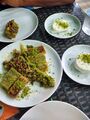 Turkish pahlava
 -
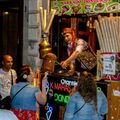 Dondurma

.jpg)

Medical Disclaimer: WikiMD is for informational purposes only and is not a substitute for professional medical advice. Content may be inaccurate or outdated and should not be used for diagnosis or treatment. Always consult your healthcare provider for medical decisions. Verify information with trusted sources such as CDC.gov and NIH.gov. By using this site, you agree that WikiMD is not liable for any outcomes related to its content. See full disclaimer.
Credits:Most images are courtesy of Wikimedia commons, and templates, categories Wikipedia, licensed under CC BY SA or similar.
Translate page: - East Asian
中文,
日本,
한국어,
South Asian
हिन्दी,
தமிழ்,
తెలుగు,
Urdu,
ಕನ್ನಡ,
Southeast Asian
Indonesian,
Vietnamese,
Thai,
မြန်မာဘာသာ,
বাংলা
European
español,
Deutsch,
français,
Greek,
português do Brasil,
polski,
română,
русский,
Nederlands,
norsk,
svenska,
suomi,
Italian
Middle Eastern & African
عربى,
Turkish,
Persian,
Hebrew,
Afrikaans,
isiZulu,
Kiswahili,
Other
Bulgarian,
Hungarian,
Czech,
Swedish,
മലയാളം,
मराठी,
ਪੰਜਾਬੀ,
ગુજરાતી,
Portuguese,
Ukrainian


