Ají (sauce)


.JPG)
Ají is a type of sauce and condiment used in South American cuisine, particularly within Andean countries. It is made primarily from chili peppers, along with a variety of local ingredients. Ají sauces vary greatly in flavor, color, and spiciness depending on the region and the specific recipe used. This sauce is a staple in many South American households and restaurants, serving as a complement to dishes such as empanadas, grilled meats, and seafood.
Ingredients[edit]
The base ingredient of Ají is the chili pepper, which can range from mild to extremely hot. The type of chili used varies by region, with some popular varieties including Aji Amarillo, Habanero, and Rocoto. Other common ingredients include onions, tomatoes, cilantro (coriander), lime juice, and water or oil. Some recipes may also include garlic, vinegar, or mustard.
Preparation[edit]
The preparation of Ají involves blending or finely chopping the ingredients to create a sauce that can range from smooth to chunky in texture. The chili peppers are typically deseeded and deveined to reduce their heat level, although some recipes call for the whole chili to be used for a spicier sauce. The ingredients are then mixed and seasoned to taste. Ají can be served fresh or stored in the refrigerator for several days, allowing the flavors to meld.
Regional Variations[edit]
Ají sauces vary widely across South America, with each country and region having its own version:
- Colombia: Known as Ají Picante, Colombian Ají often includes tomatoes, onions, cilantro, lime juice, and vinegar, with Aji Amarillo peppers for a mild heat.
- Ecuador: Ecuadorian Ají is typically made with Rocoto peppers, lime juice, and is often enriched with chochos (lupini beans).
- Peru: Peruvian Ají, such as Ají Verde, uses Aji Amarillo peppers, cilantro, lime juice, and may include cheese or mayonnaise for a creamy texture.
- Bolivia: In Bolivia, Ají is often made with Locoto peppers (a variety of Rocoto) and includes ingredients like peanuts and quinoa.
Cultural Significance[edit]
Ají is more than just a condiment in South American cuisine; it represents the rich culinary traditions and biodiversity of the region. The sauce is a testament to the importance of chili peppers in Andean culture, both as a food staple and for their medicinal properties. Ají is often present at meals, signifying the communal aspect of dining and the shared experience of enjoying food.
See Also[edit]

Ají (sauce)[edit]
-
 Salsa de ají verde (Perú)
 -
 Salsa de ají y limón
 -
 Salsa de Aji Charapita
 -
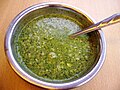 Crema de aji (Asapampa, Junin)
.JPG)
Ad. Transform your life with W8MD's
GLP-1 weight loss injections special from $29.99


W8MD Medical Weight Loss, Sleep and Medspa offers physician-supervised medical weight loss programs: NYC medical weight loss Philadelphia medical weight loss
Affordable GLP-1 Weight Loss ShotsAffordable GLP-1 Weight Loss Shots
Budget GLP-1 injections NYC (insurance & self-pay options) Popular treatments:
- Semaglutide starting from $29.99/week
- Tirzepatide starting from $45.00/week
✔ Most insurances accepted for visits ✔ Prior authorization support when eligible
Start your physician weight loss NYC journey today:
📍 NYC: Brooklyn weight loss center 📍 Philadelphia: Philadelphia weight loss center
📞 Call: 718-946-5500 (NYC) | 215-676-2334 (Philadelphia)
Tags: Affordable GLP1 weight loss NYC, Wegovy NYC, Zepbound NYC, Philadelphia medical weight loss


|
WikiMD Medical Encyclopedia |
Medical Disclaimer: WikiMD is not a substitute for professional medical advice. The information on WikiMD is provided as an information resource only, may be incorrect, outdated or misleading, and is not to be used or relied on for any diagnostic or treatment purposes. Please consult your health care provider before making any healthcare decisions or for guidance about a specific medical condition. WikiMD expressly disclaims responsibility, and shall have no liability, for any damages, loss, injury, or liability whatsoever suffered as a result of your reliance on the information contained in this site. By visiting this site you agree to the foregoing terms and conditions, which may from time to time be changed or supplemented by WikiMD. If you do not agree to the foregoing terms and conditions, you should not enter or use this site. See full disclaimer.
Credits:Most images are courtesy of Wikimedia commons, and templates, categories Wikipedia, licensed under CC BY SA or similar.
Translate this page: - East Asian
中文,
日本,
한국어,
South Asian
हिन्दी,
தமிழ்,
తెలుగు,
Urdu,
ಕನ್ನಡ,
Southeast Asian
Indonesian,
Vietnamese,
Thai,
မြန်မာဘာသာ,
বাংলা
European
español,
Deutsch,
français,
Greek,
português do Brasil,
polski,
română,
русский,
Nederlands,
norsk,
svenska,
suomi,
Italian
Middle Eastern & African
عربى,
Turkish,
Persian,
Hebrew,
Afrikaans,
isiZulu,
Kiswahili,
Other
Bulgarian,
Hungarian,
Czech,
Swedish,
മലയാളം,
मराठी,
ਪੰਜਾਬੀ,
ગુજરાતી,
Portuguese,
Ukrainian
