Atheist feminism
Atheist Feminism
Atheist feminism is a movement that advocates for the rights and equality of women within the context of atheism. It combines the principles of feminism, which seeks to address and rectify gender inequalities, with atheism, which is the absence of belief in deities. Atheist feminists argue that many religious doctrines have historically contributed to the oppression of women and that secularism can provide a more equitable framework for gender equality.
Historical Background[edit]
The roots of atheist feminism can be traced back to the 19th century, with figures such as Ernestine Rose, a Polish-American suffragist and freethinker, who was an outspoken critic of religion's role in the subjugation of women. In the 20th century, the movement gained momentum alongside the broader feminist movement, with many feminists questioning the patriarchal structures inherent in many religious institutions.
Key Concepts[edit]
Critique of Religion[edit]
Atheist feminists often critique religious texts and institutions for perpetuating gender inequality. They argue that many religions have historically placed women in subordinate roles and have justified practices such as patriarchy, misogyny, and gender discrimination.
Secularism and Gender Equality[edit]
Proponents of atheist feminism advocate for a secular approach to governance and social policy, arguing that secularism can provide a neutral ground where gender equality can be more easily achieved. They support the separation of church and state as a means to ensure that religious beliefs do not influence laws and policies that affect women's rights.
Intersectionality[edit]
Atheist feminism also embraces the concept of intersectionality, recognizing that women's experiences of oppression are shaped by multiple factors, including race, class, and sexual orientation. This approach seeks to address the diverse challenges faced by women in different contexts.
Prominent Figures[edit]
- Annie Laurie Gaylor: Co-founder of the Freedom From Religion Foundation, Gaylor has been a vocal advocate for women's rights and secularism. - Ayaan Hirsi Ali: A Somali-born activist and former Muslim, Hirsi Ali has written extensively on the need for reform in Islamic societies to improve women's rights. - Ophelia Benson: A writer and critic known for her work on the intersection of atheism and feminism.
Criticisms[edit]
Critics of atheist feminism argue that it can sometimes overlook the positive roles that religion can play in individuals' lives and communities. Additionally, some suggest that the movement may alienate religious feminists who seek to reform their faiths from within.
Also see[edit]
- Feminism - Secularism - Intersectionality - Freedom From Religion Foundation - Women's rights
| Irreligion | ||||||||||
|---|---|---|---|---|---|---|---|---|---|---|
|
Atheist feminism gallery[edit]
-
 Ernestine Rose
 -
 Elizabeth Cady Stanton
 -
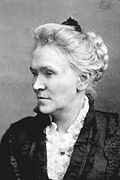 Matilda Joslyn Gage
 -
 Madalyn Murray O'Hair


Ad. Transform your health with W8MD Weight Loss, Sleep & MedSpa

Tired of being overweight?
Special offer:
Budget GLP-1 weight loss medications
- Semaglutide starting from $29.99/week and up with insurance for visit of $59.99 and up per week self pay.
- Tirzepatide starting from $45.00/week and up (dose dependent) or $69.99/week and up self pay
✔ Same-week appointments, evenings & weekends
Learn more:
- GLP-1 weight loss clinic NYC
- W8MD's NYC medical weight loss
- W8MD Philadelphia GLP-1 shots
- Philadelphia GLP-1 injections
- Affordable GLP-1 shots NYC
|
WikiMD Medical Encyclopedia |
Medical Disclaimer: WikiMD is for informational purposes only and is not a substitute for professional medical advice. Content may be inaccurate or outdated and should not be used for diagnosis or treatment. Always consult your healthcare provider for medical decisions. Verify information with trusted sources such as CDC.gov and NIH.gov. By using this site, you agree that WikiMD is not liable for any outcomes related to its content. See full disclaimer.
Credits:Most images are courtesy of Wikimedia commons, and templates, categories Wikipedia, licensed under CC BY SA or similar.
Translate this page: - East Asian
中文,
日本,
한국어,
South Asian
हिन्दी,
தமிழ்,
తెలుగు,
Urdu,
ಕನ್ನಡ,
Southeast Asian
Indonesian,
Vietnamese,
Thai,
မြန်မာဘာသာ,
বাংলা
European
español,
Deutsch,
français,
Greek,
português do Brasil,
polski,
română,
русский,
Nederlands,
norsk,
svenska,
suomi,
Italian
Middle Eastern & African
عربى,
Turkish,
Persian,
Hebrew,
Afrikaans,
isiZulu,
Kiswahili,
Other
Bulgarian,
Hungarian,
Czech,
Swedish,
മലയാളം,
मराठी,
ਪੰਜਾਬੀ,
ગુજરાતી,
Portuguese,
Ukrainian
