Mistletoe
(MIH-sul-toh) A semiparasitic plant that grows on some types of trees. Mistletoe extracts are being studied as treatments for cancer.
European Mistletoe[edit]
Common Names: European mistletoe, mistletoe
Latin Names: Viscum album
Information about Mistletoe[edit]
- European mistletoe grows on several types of common trees such as apple, oak, pine, and elm trees.
- Mistletoe has been used for centuries in traditional medicine for a variety of conditions including seizures, headaches, and arthritis. Today, mistletoe is used in Europe as a treatment for cancer.
- The berries, leaves, and stems of mistletoe are used to make extracts, which are usually given by injection under the skin.
- Mistletoe may also be taken orally (by mouth) as a dietary supplement.
- In Europe, mistletoe extracts that are given by injection are sold as prescription drugs.
- The U.S. Food and Drug Administration has not approved the use of mistletoe as a treatment for cancer or any other medical condition.
- In the United States, the use of injectable mistletoe extracts is permitted only in clinical trials.
Evidence[edit]
- There have been clinical trials of mistletoe for cancer, mostly in Europe. Although some trials indicated that mistletoe improved survival or quality of life, almost all of the trials had major weaknesses that raise doubts about their findings. These weaknesses have included small numbers of patients, incomplete data, lack of information about the dose of mistletoe, and problems with the design of the studies. <ref>https://www.nccih.nih.gov/health/european-mistletoe</ref>
- The National Center for Complementary and Integrative Health (NCCIH) and the National Cancer Institute have completed a preliminary trial to evaluate the safety of injected European mistletoe extract in combination with a cancer drug in patients with advanced cancer. It showed that patients could tolerate the herb/drug combination and provided other information that may be helpful in the design of future studies to evaluate mistletoe’s effectiveness.
- Mistletoe is not a proven cancer treatment. It should not be used outside of clinical trials.
Herbal and dietary supplements
- Aloe Vera, Ashwagandha, Astragalus, Bilberry, Black Cohosh, Butterbur, Cat's Claw, Cascara, Chaparral, Comfrey, Crofelemer, Echinacea, Ephedra, Fenugreek, Flavocoxid, Garcinia cambogia, Germander, Ginkgo, Ginseng, Greater Celandine, Green Tea, Hoodia, Hops, Horse Chestnut, Hyssop, Kava Kava, Kratom, Lavender, Maca, Margosa Oil, Melatonin, Milk Thistle, Noni, Passionflower, Pennyroyal Oil, Red Yeast Rice, Resveratrol, Saw Palmetto, Senna, Skullcap, Spirulina, St. John's Wort, Turmeric, Usnic Acid, Valerian, Yohimbine
Chinese and Other Asian Herbal Medicines
- Ba Jiao Lian, Bol Gol Zhee, Chi R Yun, Jin Bu Huan, Ma Huang, Sho Saiko To and Dai Saiko To, Shou Wu Pian
Multi-Ingredient Nutritional Supplements
See also Nutritional supplements
Mistletoe[edit]
-
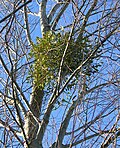 Mistletoe in White Poplar
 -
 Mistletoe
 -
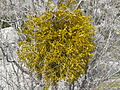 Mistletoe in Lebanon
 -
 Adrien Barrère


Ad. Transform your health with W8MD Weight Loss, Sleep & MedSpa

Tired of being overweight?
Special offer:
Budget GLP-1 weight loss medications
- Semaglutide starting from $29.99/week and up with insurance for visit of $59.99 and up per week self pay.
- Tirzepatide starting from $45.00/week and up (dose dependent) or $69.99/week and up self pay
✔ Same-week appointments, evenings & weekends
Learn more:
- GLP-1 weight loss clinic NYC
- W8MD's NYC medical weight loss
- W8MD Philadelphia GLP-1 shots
- Philadelphia GLP-1 injections
- Affordable GLP-1 shots NYC
|
WikiMD Medical Encyclopedia |
Medical Disclaimer: WikiMD is for informational purposes only and is not a substitute for professional medical advice. Content may be inaccurate or outdated and should not be used for diagnosis or treatment. Always consult your healthcare provider for medical decisions. Verify information with trusted sources such as CDC.gov and NIH.gov. By using this site, you agree that WikiMD is not liable for any outcomes related to its content. See full disclaimer.
Credits:Most images are courtesy of Wikimedia commons, and templates, categories Wikipedia, licensed under CC BY SA or similar.
Translate this page: - East Asian
中文,
日本,
한국어,
South Asian
हिन्दी,
தமிழ்,
తెలుగు,
Urdu,
ಕನ್ನಡ,
Southeast Asian
Indonesian,
Vietnamese,
Thai,
မြန်မာဘာသာ,
বাংলা
European
español,
Deutsch,
français,
Greek,
português do Brasil,
polski,
română,
русский,
Nederlands,
norsk,
svenska,
suomi,
Italian
Middle Eastern & African
عربى,
Turkish,
Persian,
Hebrew,
Afrikaans,
isiZulu,
Kiswahili,
Other
Bulgarian,
Hungarian,
Czech,
Swedish,
മലയാളം,
मराठी,
ਪੰਜਾਬੀ,
ગુજરાતી,
Portuguese,
Ukrainian
