Food in ancient Rome: Difference between revisions
CSV import Tags: mobile edit mobile web edit |
CSV import |
||
| Line 24: | Line 24: | ||
{{Ancient-Rome-stub}} | {{Ancient-Rome-stub}} | ||
<gallery> | |||
File:Pompeii_family_feast_painting_Naples.jpg|Pompeii family feast painting Naples | |||
File:Sale_bread_MAN_Napoli_Inv9071_n01.jpg|Sale bread MAN Napoli Inv9071 n01 | |||
File:The_Pistrinum_(bakery)_on_Vicolo_Storto_(Reg_VII,_Ins_2,_22)_belonging_to_N._Popidius_Priscus,_Pompeii_(14856682197).jpg|The Pistrinum (bakery) on Vicolo Storto (Reg VII, Ins 2, 22) belonging to N. Popidius Priscus, Pompeii | |||
File:Pompejanischer_Maler_um_70_001.jpg|Pompejanischer Maler um 70 001 | |||
File:Volubilis1.3.JPG|Volubilis1.3 | |||
File:Hoxne_Hoard_26.jpg|Hoxne Hoard 26 | |||
File:Mosaico_di_un_giovane_come_mese_di_giugno,_III_secolo_dc..JPG|Mosaico di un giovane come mese di giugno, III secolo dc. | |||
File:Ostia_Antica_-_Caseggiato_del_Termopolio_(5154206528).jpg|Ostia Antica - Caseggiato del Termopolio | |||
File:Still_life_Tor_Marancia_Vatican.jpg|Still life Tor Marancia Vatican | |||
File:Still_life_with_eggs,_birds_and_bronze_dishes,_Pompeii.jpg|Still life with eggs, birds and bronze dishes, Pompeii | |||
File:Vendanges_romaines_à_Cherchell.jpg|Vendanges romaines à Cherchell | |||
File:Triclinium_-_Archäologische_Staatssammlung_München.JPG|Triclinium - Archäologische Staatssammlung München | |||
File:Messy_floor_mosaic.jpg|Messy floor mosaic | |||
</gallery> | |||
Latest revision as of 21:36, 20 February 2025
Food in Ancient Rome played a crucial role in the social, cultural, and economic aspects of Roman life. The diet of the ancient Romans was influenced by both the agricultural capabilities of the Roman Empire and the vast trade networks they established. The cuisine of ancient Rome evolved over time, from the frugal meals of its early republic to the more diverse and elaborate dishes of the empire.
Dietary Staples[edit]
The basic diet in Rome consisted of a staple grain, which was either wheat, barley, or millet; vegetables; and a modest amount of meat. Bread made from wheat was a common food item, accompanied by olive oil, cheese, and wine, which were consumed by people across all social classes. Legumes such as beans, lentils, and peas were important sources of protein for those who could not afford much meat.
Meat and Fish[edit]
Meat consumption varied with wealth and status. The rich could afford a variety of meats, including beef, pork, lamb, and poultry, as well as exotic dishes that included peacock and ostrich. Fish and seafood were also popular, especially in coastal areas, with mullet, mackerel, and oysters being particularly prized.
Fruits and Vegetables[edit]
A wide range of fruits and vegetables were available to the Romans. Common vegetables included leeks, onions, cabbage, and carrots, while fruits such as apples, pears, grapes, and figs were widely consumed. Olives and grapes were particularly important, not only as food but also for producing olive oil and wine, respectively.
Seasoning and Cooking Methods[edit]
Ancient Roman cuisine was known for its use of various herbs and spices to flavor food. Garum, a fermented fish sauce, was a popular condiment that added a salty flavor to dishes. Cooking methods included boiling, frying, and grilling, with the wealthier Romans having access to a more diverse range of cooking techniques and ingredients.
Dining Customs[edit]
Dining customs in ancient Rome reflected the social hierarchy. The wealthy could afford elaborate meals consisting of multiple courses, while the poor often ate simpler meals. Banquets and feasts were common among the elite, serving as a display of wealth and a means to strengthen social bonds. The typical dining arrangement for such occasions was the triclinium, a room with three couches around a low table, where guests would recline while eating.
Influence and Legacy[edit]
The food culture of ancient Rome has had a lasting impact on Western cuisine. Many ingredients and dishes that were popular in ancient Rome are still part of Mediterranean cuisine today. Additionally, the Roman emphasis on agricultural innovation and food trade networks laid the groundwork for future food supply systems in Europe.

This article is a ancient Rome–related stub. You can help WikiMD by expanding it!
-
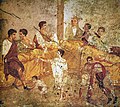 Pompeii family feast painting Naples
 -
 Sale bread MAN Napoli Inv9071 n01
 -
 The Pistrinum (bakery) on Vicolo Storto (Reg VII, Ins 2, 22) belonging to N. Popidius Priscus, Pompeii
 -
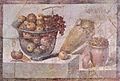 Pompejanischer Maler um 70 001
 -
 Volubilis1.3
 -
 Hoxne Hoard 26
 -
 Mosaico di un giovane come mese di giugno, III secolo dc.
 -
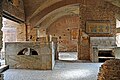 Ostia Antica - Caseggiato del Termopolio
 -
 Still life Tor Marancia Vatican
 -
 Still life with eggs, birds and bronze dishes, Pompeii
 -
 Vendanges romaines à Cherchell
 -
 Triclinium - Archäologische Staatssammlung München
 -
 Messy floor mosaic


_on_Vicolo_Storto_(Reg_VII,_Ins_2,_22)_belonging_to_N._Popidius_Priscus,_Pompeii_(14856682197).jpg)


.jpg)


