Datil pepper: Difference between revisions
CSV import |
CSV import |
||
| Line 29: | Line 29: | ||
{{Capsicum}} | {{Capsicum}} | ||
{{food-stub}} | {{food-stub}} | ||
<gallery> | |||
File:Datil.jpg|Datil pepper | |||
File:Datil_(2022_11_21_15_23_44_UTC).jpg|Datil pepper | |||
File:St._Johns_County_Florida_Incorporated_and_Unincorporated_areas_St._Augustine_Highlighted.svg|Map highlighting St. Augustine in St. Johns County, Florida | |||
File:Crafts_o_(3747185946).jpg|Datil pepper | |||
</gallery> | |||
Latest revision as of 04:36, 18 February 2025
Datil Pepper
The Datil Pepper is a variety of Capsicum chinense, a species of chili pepper that is native to the Americas. The Datil Pepper is unique to St. Augustine, Florida, and is one of the few pepper varieties that are not grown commercially on a large scale.
History[edit]
The Datil Pepper is believed to have been brought to St. Augustine by Minorcan settlers in the late 18th century. The Minorcans were indentured servants from the Mediterranean island of Minorca, who were brought to Florida to work on indigo plantations. When the plantations failed, the Minorcans moved to St. Augustine, bringing the Datil Pepper with them.
Cultivation[edit]
Datil Peppers are typically grown in home gardens and are a key ingredient in Minorcan cuisine. The peppers are small, about 3.5 inches long, and turn from green to yellow-orange when ripe. They are known for their sweet, fruity flavor and high heat level, similar to the Habanero or Scotch Bonnet peppers.
Culinary Uses[edit]
In St. Augustine, Datil Peppers are used to make a variety of foods, including hot sauces, jellies, mustards, and spice mixes. They are also used in traditional Minorcan dishes, such as pilau (a rice dish) and chowder. The peppers are often pickled or used fresh in cooking.
Cultural Significance[edit]
The Datil Pepper is an important part of St. Augustine's cultural heritage and is celebrated annually at the Datil Pepper Festival. The festival features a cook-off, a pepper eating contest, and vendors selling Datil Pepper products.
See Also[edit]

-
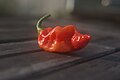 Datil pepper
 -
 Datil pepper
 -
 Map highlighting St. Augustine in St. Johns County, Florida
 -
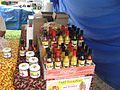 Datil pepper

.jpg)

.jpg)
