Inbreeding: Difference between revisions
No edit summary |
CSV import |
||
| Line 24: | Line 24: | ||
{{stub}} | {{stub}} | ||
{{Genetics}} | {{Genetics}} | ||
<gallery> | |||
File:Child first cousins Homozy BD.png|Inbreeding | |||
File:Averages of individuals inbreeding coefficients per population or group of.png|Inbreeding | |||
File:Animation of uniparental isodisomy.ogv|Inbreeding | |||
File:Heterozygous.jpg|Inbreeding | |||
File:Mangoustes rayées - Banded Mongooses.jpg|Inbreeding | |||
File:White tiger-Gunma Safari Park.jpg|Inbreeding | |||
File:Shaded silver Persian Cat Missionhill Cosmic Rainstorm.jpg|Inbreeding | |||
File:Intense inbreeding - Continuous sire to daughter mating.svg|Inbreeding | |||
File:Global prevalence of consanguinity.svg|Inbreeding | |||
File:Carlos II de España, por Juan Carreño de Miranda (Museo del Prado).jpg|Inbreeding | |||
</gallery> | |||
Revision as of 00:51, 20 February 2025
Inbreeding refers to the mating or breeding between individuals that share a close genetic relationship. This process can increase the frequency of homozygous (identical) alleles, potentially leading to the manifestation of recessive traits, which can be either beneficial or deleterious.<ref name="EncycBrit">
Inbreeding(link). {{{website}}}. Encyclopedia Britannica.
</ref>
Inbreeding and Genetic Consequences
Inbreeding can increase the likelihood of offspring inheriting two copies of a recessive allele, resulting in the expression of traits that may have been masked in the parental generation. This genetic homogeneity can have several potential impacts, such as:
- Increased risk of genetic disorders: Many genetic disorders are recessive, meaning they only manifest when an individual inherits two copies of the problematic allele. Inbreeding can increase the probability of such conditions.<ref name="InbreedHealth">,
 Inbreeding and its effect on health: A review,
 Veterinary World,
 2020,
 Vol. 13(Issue: 6),
 pp. 1202-1209,
 DOI: 10.14202/vetworld.2020.1202-1209,


 Full text,</ref>
- Reduced genetic diversity: Inbred populations tend to have less genetic diversity, which can reduce their resilience to environmental changes or disease outbreaks.<ref name="InbreedHealth" />
- Inbreeding depression: This term describes the reduced biological fitness in a given population due to the effects of inbreeding. It can lead to decreased survival rates, fertility issues, and an overall decline in population health.<ref name="InbreedDepression">,
 Inbreeding depression and its evolutionary consequences,
 Annual Review of Ecology, Evolution, and Systematics,
 2008,
 Vol. 39,
 pp. 237-262,
 DOI: 10.1146/annurev.ecolsys.39.110707.173511,</ref>
Outbreeding as a Contrast
In contrast to inbreeding, outbreeding or outcrossing refers to the mating between unrelated or distantly related individuals. This practice is often used to increase genetic diversity, thereby potentially enhancing the health, survival, and evolutionary potential of populations.<ref name="OutbreedReview">,
 Outbreeding, Inbreeding, and Heterosis,
 Plant Breeding Reviews,
 1998,
 Vol. 16,
 pp. 193-214,
 DOI: 10.1002/9780470650172.ch4,</ref>
References
<references group="" responsive="1"></references>
See also
 | |
|---|---|
 |
 |
| Genetics | ||||||||||
|---|---|---|---|---|---|---|---|---|---|---|
* Category
|
-
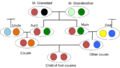 Inbreeding
 -
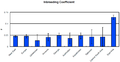 Inbreeding
 -
 Inbreeding
 -
 Inbreeding
 -
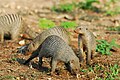 Inbreeding
 -
 Inbreeding
 -
 Inbreeding
 -
 Inbreeding
 -
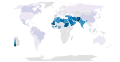 Inbreeding
 -
 Inbreeding


.jpg)
