Fever: Difference between revisions
CSV import |
CSV import |
||
| Line 1: | Line 1: | ||
A fever, also known as pyrexia, is a temporary increase in body temperature above the normal range. While normal body temperature can vary from person to person, it is typically around 98. | {{SI}} | ||
{{Infobox medical condition | |||
| name = Fever | |||
| image = [[File:Symptoms-fever.jpg|250px]] | |||
| caption = A [[thermometer]] showing a high temperature, indicative of fever | |||
| field = [[Infectious disease]] | |||
| symptoms = [[Elevated body temperature]], [[sweating]], [[shivering]], [[headache]], [[muscle aches]] | |||
| complications = [[Seizures]], [[dehydration]], [[delirium]] | |||
| onset = Rapid | |||
| duration = Variable, often a few days | |||
| causes = [[Infection]], [[inflammation]], [[heat exhaustion]], [[medications]] | |||
| risks = [[Young children]], [[elderly]], [[immunocompromised]] individuals | |||
| diagnosis = [[Physical examination]], [[thermometry]] | |||
| differential = [[Hyperthermia]], [[heat stroke]], [[thyroid storm]] | |||
| treatment = [[Antipyretics]], [[hydration]], [[rest]] | |||
| medication = [[Paracetamol]], [[ibuprofen]] | |||
| frequency = Common | |||
| deaths = Rare, unless associated with severe underlying conditions | |||
}} | |||
A fever, also known as pyrexia, is a temporary increase in body temperature above the normal range. While normal body temperature can vary from person to person, it is typically around 98.6°F (37°C). Although a fever is not a disease in itself, it is usually a sign that the body is fighting an illness or infection. | |||
== Causes == | == Causes == | ||
There are various factors that can cause a fever, including: | There are various factors that can cause a fever, including: | ||
* '''[[Infections]]:''' Most fevers result from viral or bacterial infections, such as the flu, a cold, or a urinary tract infection. The body raises its temperature to make it more difficult for the pathogens to survive and to activate the immune system. | * '''[[Infections]]:''' Most fevers result from viral or bacterial infections, such as the flu, a cold, or a urinary tract infection. The body raises its temperature to make it more difficult for the pathogens to survive and to activate the immune system. | ||
* '''Medications:''' Some medicines, including certain antibiotics, blood pressure medications, and [[anti-seizure medicines]], can cause fevers as a side effect. | * '''Medications:''' Some medicines, including certain antibiotics, blood pressure medications, and [[anti-seizure medicines]], can cause fevers as a side effect. | ||
| Line 12: | Line 28: | ||
* '''Immunizations:''' Some childhood vaccinations may cause a mild fever as the body responds to the vaccine. | * '''Immunizations:''' Some childhood vaccinations may cause a mild fever as the body responds to the vaccine. | ||
== Symptoms == | == Symptoms == | ||
In addition to an elevated body temperature, fevers can cause a range of symptoms, such as: | In addition to an elevated body temperature, fevers can cause a range of symptoms, such as: | ||
* Sweating | * Sweating | ||
* Shivering | * Shivering | ||
| Line 24: | Line 38: | ||
* Increased heart rate | * Increased heart rate | ||
== Diagnosis == | == Diagnosis == | ||
A fever can be diagnosed using a thermometer to measure body temperature. Thermometers can be placed in various locations, including the mouth (oral), ear (tympanic), armpit (axillary), or rectum (rectal). | A fever can be diagnosed using a thermometer to measure body temperature. Thermometers can be placed in various locations, including the mouth (oral), ear (tympanic), armpit (axillary), or rectum (rectal). | ||
== Treatment == | == Treatment == | ||
The treatment for a fever depends on the underlying cause. In cases of mild to moderate fever, the following measures can help alleviate symptoms: | The treatment for a fever depends on the underlying cause. In cases of mild to moderate fever, the following measures can help alleviate symptoms: | ||
* '''Over-the-counter medications:''' Acetaminophen, ibuprofen, or naproxen can help lower a fever and relieve associated discomfort. Aspirin is an option for adults but should not be given to children with fevers, as it can cause [[Reye's syndrome]], a rare but serious condition. | * '''Over-the-counter medications:''' Acetaminophen, ibuprofen, or naproxen can help lower a fever and relieve associated discomfort. Aspirin is an option for adults but should not be given to children with fevers, as it can cause [[Reye's syndrome]], a rare but serious condition. | ||
* '''Fluid intake:''' Drinking plenty of fluids, such as water, juice, or broth, can help prevent dehydration caused by fever and sweating. | * '''Fluid intake:''' Drinking plenty of fluids, such as water, juice, or broth, can help prevent dehydration caused by fever and sweating. | ||
* '''Rest:''' Adequate rest allows the body to focus its energy on fighting the infection or illness causing the fever. | * '''Rest:''' Adequate rest allows the body to focus its energy on fighting the infection or illness causing the fever. | ||
== When to Seek Medical Attention == | == When to Seek Medical Attention == | ||
It is important to consult a healthcare provider if: | It is important to consult a healthcare provider if: | ||
* The fever is unusually high (over 103°F or 39.4°C) or lasts for more than a few days. | |||
* The fever is unusually high (over | |||
* The fever is accompanied by severe symptoms, such as difficulty breathing, chest pain, or a stiff neck. | * The fever is accompanied by severe symptoms, such as difficulty breathing, chest pain, or a stiff neck. | ||
* The person with the fever is very young, elderly, or has a weakened immune system. | * The person with the fever is very young, elderly, or has a weakened immune system. | ||
== Prevention == | == Prevention == | ||
To reduce the risk of developing a fever, it is essential to take measures to prevent infections, such as: | To reduce the risk of developing a fever, it is essential to take measures to prevent infections, such as: | ||
* Washing hands regularly with soap and water | * Washing hands regularly with soap and water | ||
* Keeping up-to-date with vaccinations | * Keeping up-to-date with vaccinations | ||
| Line 51: | Line 58: | ||
* Practicing safe food handling and storage | * Practicing safe food handling and storage | ||
* Staying hydrated and getting adequate rest to maintain overall health | * Staying hydrated and getting adequate rest to maintain overall health | ||
==Images== | |||
<gallery> | |||
File:fever-conceptual.svg|Conceptual Illustration of Fever | |||
File:Virgil_Solis_Febris.jpg|Febris by Virgil Solis | |||
</gallery> | |||
== References == | == References == | ||
* MedlinePlus. (2021). Fever. U.S. National Library of Medicine. Retrieved from https://medlineplus.gov/fever.html | * MedlinePlus. (2021). Fever. U.S. National Library of Medicine. Retrieved from https://medlineplus.gov/fever.html | ||
| Line 63: | Line 75: | ||
[[Category:Fever| ]] | [[Category:Fever| ]] | ||
[[Category:Symptoms and signs]] | [[Category:Symptoms and signs]] | ||
Latest revision as of 15:53, 6 April 2025

Editor-In-Chief: Prab R Tumpati, MD
Obesity, Sleep & Internal medicine
Founder, WikiMD Wellnesspedia &
W8MD's weight loss doctor NYC
Philadelphia GLP-1 weight loss and GLP-1 clinic NYC
| Fever | |
|---|---|

| |
| Synonyms | N/A |
| Pronounce | N/A |
| Specialty | N/A |
| Symptoms | Elevated body temperature, sweating, shivering, headache, muscle aches |
| Complications | Seizures, dehydration, delirium |
| Onset | Rapid |
| Duration | Variable, often a few days |
| Types | N/A |
| Causes | Infection, inflammation, heat exhaustion, medications |
| Risks | Young children, elderly, immunocompromised individuals |
| Diagnosis | Physical examination, thermometry |
| Differential diagnosis | Hyperthermia, heat stroke, thyroid storm |
| Prevention | N/A |
| Treatment | Antipyretics, hydration, rest |
| Medication | Paracetamol, ibuprofen |
| Prognosis | N/A |
| Frequency | Common |
| Deaths | Rare, unless associated with severe underlying conditions |
A fever, also known as pyrexia, is a temporary increase in body temperature above the normal range. While normal body temperature can vary from person to person, it is typically around 98.6°F (37°C). Although a fever is not a disease in itself, it is usually a sign that the body is fighting an illness or infection.
Causes[edit]
There are various factors that can cause a fever, including:
- Infections: Most fevers result from viral or bacterial infections, such as the flu, a cold, or a urinary tract infection. The body raises its temperature to make it more difficult for the pathogens to survive and to activate the immune system.
- Medications: Some medicines, including certain antibiotics, blood pressure medications, and anti-seizure medicines, can cause fevers as a side effect.
- Heat illness: Overexposure to high temperatures or excessive physical exertion in hot weather can lead to heat-related illnesses, such as heat exhaustion or heat stroke, which may cause a fever.
- Cancers: Certain types of cancer, like leukemia and lymphoma, can cause fevers.
- Autoimmune diseases: Conditions like lupus, rheumatoid arthritis, and inflammatory bowel disease can lead to fevers due to the immune system attacking the body's own tissues.
- Immunizations: Some childhood vaccinations may cause a mild fever as the body responds to the vaccine.
Symptoms[edit]
In addition to an elevated body temperature, fevers can cause a range of symptoms, such as:
- Sweating
- Shivering
- Headache
- Muscle aches
- Weakness
- Loss of appetite
- Dehydration
- Increased heart rate
Diagnosis[edit]
A fever can be diagnosed using a thermometer to measure body temperature. Thermometers can be placed in various locations, including the mouth (oral), ear (tympanic), armpit (axillary), or rectum (rectal).
Treatment[edit]
The treatment for a fever depends on the underlying cause. In cases of mild to moderate fever, the following measures can help alleviate symptoms:
- Over-the-counter medications: Acetaminophen, ibuprofen, or naproxen can help lower a fever and relieve associated discomfort. Aspirin is an option for adults but should not be given to children with fevers, as it can cause Reye's syndrome, a rare but serious condition.
- Fluid intake: Drinking plenty of fluids, such as water, juice, or broth, can help prevent dehydration caused by fever and sweating.
- Rest: Adequate rest allows the body to focus its energy on fighting the infection or illness causing the fever.
When to Seek Medical Attention[edit]
It is important to consult a healthcare provider if:
- The fever is unusually high (over 103°F or 39.4°C) or lasts for more than a few days.
- The fever is accompanied by severe symptoms, such as difficulty breathing, chest pain, or a stiff neck.
- The person with the fever is very young, elderly, or has a weakened immune system.
Prevention[edit]
To reduce the risk of developing a fever, it is essential to take measures to prevent infections, such as:
- Washing hands regularly with soap and water
- Keeping up-to-date with vaccinations
- Maintaining good hygiene practices
- Avoiding close
- contact with individuals who are sick
- Practicing safe food handling and storage
- Staying hydrated and getting adequate rest to maintain overall health
Images[edit]
-
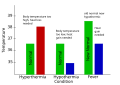 Conceptual Illustration of Fever
 -
 Febris by Virgil Solis


References[edit]
- MedlinePlus. (2021). Fever. U.S. National Library of Medicine. Retrieved from https://medlineplus.gov/fever.html
- Mayo Clinic. (2020). Fever. Retrieved from https://www.mayoclinic.org/diseases-conditions/fever/symptoms-causes/syc-20352759
- American Academy of Pediatrics. (2018). Fever and Your Child. Retrieved from https://www.healthychildren.org/English/health-issues/conditions/fever/Pages/Fever-and-Your-Child.aspx
- National Institute of Allergy and Infectious Diseases. (2018). Preventing the Spread of Infectious Diseases. Retrieved from https://www.niaid.nih.gov/research/preventing-spread-infectious-diseases
 | |
|---|---|
 |
 |
| Symptoms and signs that are general or constitutional | ||||||
|---|---|---|---|---|---|---|
|
