Marshmallow: Difference between revisions
No edit summary |
CSV import Tags: mobile edit mobile web edit |
||
| Line 37: | Line 37: | ||
[[Category:Skewered foods]] | [[Category:Skewered foods]] | ||
{{food-stub}} | {{food-stub}} | ||
<gallery> | |||
File:White_Marshmallows.jpg|White Marshmallows | |||
File:Althaea_officinalis_002.JPG|Althaea officinalis | |||
File:Marshmallow.webmhd.webm|Marshmallow Video | |||
File:Just_Born_Peeps_in_an_Easter_Basket.jpg|Just Born Peeps in an Easter Basket | |||
File:Handmade_Marshmallows_by_FatMatt_(4774326832).jpg|Handmade Marshmallows by FatMatt | |||
File:Mousse_with_marshmallows.jpg|Mousse with Marshmallows | |||
</gallery> | |||
Latest revision as of 11:44, 25 February 2025

Marshmallow refers to both a plant species, Althaea officinalis, and a popular confectionery treat. The marshmallow plant has a rich history of medicinal use, while the confectionery marshmallow is known for its soft, sweet, and fluffy texture. In this article, we will explore the origins, cultivation, medicinal uses, and the making of marshmallow confections.
Marshmallow Plant[edit]
1. Description and Cultivation The marshmallow plant, Althaea officinalis, is a perennial herbaceous plant that belongs to the Malvaceae family. It is native to Europe, Western Asia, and North Africa. The plant has velvety leaves, pink or white flowers, and a thick, fleshy root. It grows well in moist and marshy environments, hence its name.
Cultivating marshmallow requires a sunny location and well-drained soil. The plant can be propagated through seeds or cuttings. It thrives in temperate climates and requires regular watering. Harvesting the root usually takes place in autumn when it reaches its peak medicinal potency.
2. Medicinal Uses Marshmallow has a long history of medicinal use, dating back to ancient Egyptian and Greek civilizations. The roots and leaves of the plant contain mucilage, a gel-like substance that provides soothing and demulcent properties. Some common medicinal uses of marshmallow include:
Respiratory Health: Marshmallow is known for its ability to soothe and relieve respiratory ailments such as coughs, sore throats, and bronchitis. It helps to reduce inflammation and ease irritation in the respiratory tract.
Digestive Health: Marshmallow is beneficial for gastrointestinal issues such as indigestion, heartburn, and gastritis. It forms a protective coating on the digestive lining, reducing irritation and promoting healing.
Skin Care: Marshmallow has emollient and anti-inflammatory properties that make it suitable for soothing skin conditions like eczema, psoriasis, and minor wounds. It can be used topically as a poultice or added to skincare products.
Marshmallow Confectionery[edit]
1. Making Marshmallow The confectionery marshmallow we are familiar with today is a sweet treat made from sugar, corn syrup, gelatin, and flavorings. The process involves whipping a hot sugar syrup with gelatin until it becomes light and fluffy. The mixture is then poured into a pan, allowed to set, and cut into squares or shapes.
2. Culinary Uses Marshmallows are a versatile confectionery ingredient and are commonly used in various culinary creations. Some popular uses include:
Hot Chocolate Topping: Marshmallows are often used as a topping for hot chocolate, melting into a sweet and creamy layer on the surface of the beverage.
S'mores: Marshmallows are an essential component of the classic campfire treat, s'mores. They are toasted over an open flame and sandwiched between graham crackers and chocolate for a gooey and delicious dessert.
Baking and Desserts: Marshmallows can be added to baked goods such as cookies, brownies, and cakes for a soft and chewy texture. They can also be incorporated into ice cream, fudge, and other sweet treats.
| Candy | ||||||||||
|---|---|---|---|---|---|---|---|---|---|---|
|

-
 White Marshmallows
 -
 Althaea officinalis
 -
 Marshmallow Video
 -
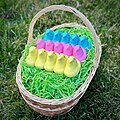 Just Born Peeps in an Easter Basket
 -
 Handmade Marshmallows by FatMatt
 -
 Mousse with Marshmallows


.jpg)

