Siopao

Filipino steamed bun filled with various ingredients
| Alternative names | |
| Type | Dim sum |
| Course | |
| Place of origin | Philippines |
| Region or state | |
| Associated national cuisine | |
| Created by | |
| Invented | |
| Cooking time | minutes to minutes |
| Serving temperature | Hot |
| Main ingredients | Flour, meat (usually pork, chicken, or beef) |
| Ingredients generally used | |
| Variations | Asado, Bola-bola |
| Food energy | kcal |
| Nutritional value | Protein: g, Fat: g, Carbohydrate: g |
| Glycemic index | |
| Similar dishes | |
| Other information | |
| Website | [ Official website] |
Siopao is a popular Filipino steamed bun that is typically filled with a variety of ingredients. The name "siopao" is derived from the Hokkien term "chhàu-pau" (燒包), which means "steamed bun." It is a type of dim sum and is similar to the Chinese baozi.
History[edit]
Siopao was introduced to the Philippines by Chinese immigrants and has since become a staple in Filipino cuisine. It is commonly sold in bakeries, restaurants, and by street vendors.
Varieties[edit]
There are two main varieties of siopao:
- Asado: This variety is filled with barbecued pork in a sweet and savory sauce.
- Bola-bola: This variety contains a mixture of ground meat (usually pork, chicken, or beef) and sometimes includes a salted egg or Chinese sausage.
Preparation[edit]
The dough for siopao is made from flour, water, sugar, and yeast. The filling is prepared separately and then wrapped in the dough. The buns are then steamed until they are fluffy and cooked through.
Serving[edit]
Siopao is typically served hot and can be eaten as a snack or a meal. It is often accompanied by a dipping sauce made from soy sauce, vinegar, and sugar.
Related Pages[edit]
 | This Philippines-related article is a stub. You can help WikiMD by expanding the page. |
Siopao[edit]
-
 Steamed Pork Buns BBQ Siopao Asado
 -
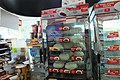 Siopao Take-Home Packs
 -
 Siopao vendor

.jpg)


Medical Disclaimer: WikiMD is for informational purposes only and is not a substitute for professional medical advice. Content may be inaccurate or outdated and should not be used for diagnosis or treatment. Always consult your healthcare provider for medical decisions. Verify information with trusted sources such as CDC.gov and NIH.gov. By using this site, you agree that WikiMD is not liable for any outcomes related to its content. See full disclaimer.
Credits:Most images are courtesy of Wikimedia commons, and templates, categories Wikipedia, licensed under CC BY SA or similar.
Translate page: - East Asian
中文,
日本,
한국어,
South Asian
हिन्दी,
தமிழ்,
తెలుగు,
Urdu,
ಕನ್ನಡ,
Southeast Asian
Indonesian,
Vietnamese,
Thai,
မြန်မာဘာသာ,
বাংলা
European
español,
Deutsch,
français,
Greek,
português do Brasil,
polski,
română,
русский,
Nederlands,
norsk,
svenska,
suomi,
Italian
Middle Eastern & African
عربى,
Turkish,
Persian,
Hebrew,
Afrikaans,
isiZulu,
Kiswahili,
Other
Bulgarian,
Hungarian,
Czech,
Swedish,
മലയാളം,
मराठी,
ਪੰਜਾਬੀ,
ગુજરાતી,
Portuguese,
Ukrainian

