Seven-layer salad
Seven-layer salad is a traditional American dish that is often served at potlucks, barbecues, and other casual gatherings. The salad is known for its colorful presentation and the variety of ingredients layered in a clear glass dish, allowing each layer to be visible.
History[edit]
The origins of the seven-layer salad are not well-documented, but it is believed to have emerged in the United States during the mid-20th century. It gained popularity in the 1970s and 1980s as a staple of potluck dinners and church suppers, particularly in the South and Midwest.
Preparation[edit]
The seven-layer salad is typically assembled in a clear glass dish to showcase the layers. The specific ingredients can vary, but the salad traditionally includes layers of:
Each layer is spread evenly over the previous one, with the mayonnaise often mixed with sugar to create a sweet dressing that covers the top layer. The salad is usually topped with crumbled bacon and additional cheese.
Variations[edit]
While the traditional seven-layer salad includes the ingredients listed above, many variations exist. Some versions include layers of hard-boiled egg, tomato, cucumber, or carrot. Others replace the mayonnaise with a different dressing, such as ranch dressing or sour cream. The salad can also be made with more or fewer layers, depending on personal preference.
Serving[edit]
The seven-layer salad is typically refrigerated for several hours or overnight before serving to allow the flavors to meld. It is served directly from the dish in which it was assembled, with a long spoon or fork to reach the bottom layer.
Cultural significance[edit]
The seven-layer salad is a staple of American potluck dinners and is often associated with holidays, picnics, and family gatherings. Its colorful presentation and the ability to customize the layers make it a popular choice for these occasions.


-
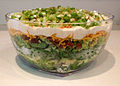 Seven layer salad

Advertise on WikiMD — 81,000+ full articles, ~900,000 total pages, ~250 million page views. Global reach, limited time promotional rates from $1/page/day. Learn more · View stats


Translate page: - East Asian
中文,
日本,
한국어,
South Asian
हिन्दी,
தமிழ்,
తెలుగు,
Urdu,
ಕನ್ನಡ,
Southeast Asian
Indonesian,
Vietnamese,
Thai,
မြန်မာဘာသာ,
বাংলা
European
español,
Deutsch,
français,
Greek,
português do Brasil,
polski,
română,
русский,
Nederlands,
norsk,
svenska,
suomi,
Italian
Middle Eastern & African
عربى,
Turkish,
Persian,
Hebrew,
Afrikaans,
isiZulu,
Kiswahili,
Other
Bulgarian,
Hungarian,
Czech,
Swedish,
മലയാളം,
मराठी,
ਪੰਜਾਬੀ,
ગુજરાતી,
Portuguese,
Ukrainian
About WikiMD • Contact • Disclaimer • Privacy • Copyright • Site statistics
Some content and images may originate from Wikimedia Commons or Wikipedia and remain subject to their stated licenses. Unless otherwise noted, eligible WikiMD content is available under CC BY-SA 4.0.
WikiMD Wellnesspedia — Free health & wellness information for patients, students, and health professionals.

