Rubiyan salad
Rubiyan Salad is a popular salad dish that originates from the Middle East. It is primarily made with shrimp (rubiyan in Arabic), mixed with various vegetables and spices. The dish is known for its unique combination of flavors and textures, and is often served as a starter or side dish in Middle Eastern cuisine.
Ingredients[edit]
The main ingredient in Rubiyan Salad is shrimp, which is typically boiled or grilled before being added to the salad. Other common ingredients include lettuce, tomatoes, cucumbers, and onions. The salad is often dressed with lemon juice, olive oil, and various spices such as salt, pepper, and paprika. Some variations of the dish may also include additional ingredients like avocado, bell peppers, or feta cheese.
Preparation[edit]
The preparation of Rubiyan Salad involves several steps. First, the shrimp is cooked and allowed to cool. While the shrimp is cooling, the vegetables are chopped and mixed together in a large bowl. The dressing is then prepared by combining the lemon juice, olive oil, and spices. Once the shrimp has cooled, it is added to the bowl with the vegetables and the dressing is poured over the top. The salad is then tossed to ensure that all the ingredients are evenly coated with the dressing.
Variations[edit]
There are many variations of Rubiyan Salad, each with its own unique twist. Some versions may include additional seafood like crab or lobster, while others may feature different types of vegetables or dressings. In some regions, Rubiyan Salad is served with a side of pita bread or over a bed of rice.
Cultural Significance[edit]
Rubiyan Salad is a staple in many Middle Eastern cuisines, particularly in countries like Saudi Arabia, United Arab Emirates, and Qatar. It is often served during special occasions and celebrations, and is a popular choice for family gatherings and parties.
See Also[edit]

-
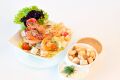 Rubiyan salad


Medical Disclaimer: WikiMD is for informational purposes only and is not a substitute for professional medical advice. Content may be inaccurate or outdated and should not be used for diagnosis or treatment. Always consult your healthcare provider for medical decisions. Verify information with trusted sources such as CDC.gov and NIH.gov. By using this site, you agree that WikiMD is not liable for any outcomes related to its content. See full disclaimer.
Credits:Most images are courtesy of Wikimedia commons, and templates, categories Wikipedia, licensed under CC BY SA or similar.
Translate page: - East Asian
中文,
日本,
한국어,
South Asian
हिन्दी,
தமிழ்,
తెలుగు,
Urdu,
ಕನ್ನಡ,
Southeast Asian
Indonesian,
Vietnamese,
Thai,
မြန်မာဘာသာ,
বাংলা
European
español,
Deutsch,
français,
Greek,
português do Brasil,
polski,
română,
русский,
Nederlands,
norsk,
svenska,
suomi,
Italian
Middle Eastern & African
عربى,
Turkish,
Persian,
Hebrew,
Afrikaans,
isiZulu,
Kiswahili,
Other
Bulgarian,
Hungarian,
Czech,
Swedish,
മലയാളം,
मराठी,
ਪੰਜਾਬੀ,
ગુજરાતી,
Portuguese,
Ukrainian

