Potato skins
Potato skins are a popular appetizer and snack food made from the outer layer of a potato. They are often served in restaurants and bars, and are also a common homemade dish.
History[edit]
The exact origin of potato skins is unclear, but they likely emerged as a way to utilize the entire potato and reduce food waste. They became popular in the United States in the 1970s and 1980s, particularly in casual dining establishments.
Preparation[edit]
Potato skins are typically prepared by first baking or boiling whole potatoes. Once cooked, the potatoes are cut in half and the inner flesh is scooped out, leaving a shell of skin and a thin layer of potato. The skins are then typically brushed with oil or butter and baked until crispy. They are often topped with ingredients such as cheese, bacon, sour cream, and green onions.
Nutritional Value[edit]
Potato skins are high in fiber and contain significant amounts of vitamin C, vitamin B6, potassium, and iron. However, they can also be high in fat and calories, particularly when topped with cheese and bacon.
Variations[edit]
There are many variations of potato skins, including those topped with chili, guacamole, salsa, or other ingredients. Some versions are made with sweet potatoes instead of regular potatoes.
In Popular Culture[edit]
Potato skins have been featured in numerous television shows and movies, often as a symbol of casual, comfort food. They are also a popular item at Super Bowl parties and other sports-viewing events.
See Also[edit]

-
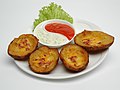 Potato skins arranged on a plate as an appetizer


Medical Disclaimer: WikiMD is for informational purposes only and is not a substitute for professional medical advice. Content may be inaccurate or outdated and should not be used for diagnosis or treatment. Always consult your healthcare provider for medical decisions. Verify information with trusted sources such as CDC.gov and NIH.gov. By using this site, you agree that WikiMD is not liable for any outcomes related to its content. See full disclaimer.
Credits:Most images are courtesy of Wikimedia commons, and templates, categories Wikipedia, licensed under CC BY SA or similar.
Translate page: - East Asian
中文,
日本,
한국어,
South Asian
हिन्दी,
தமிழ்,
తెలుగు,
Urdu,
ಕನ್ನಡ,
Southeast Asian
Indonesian,
Vietnamese,
Thai,
မြန်မာဘာသာ,
বাংলা
European
español,
Deutsch,
français,
Greek,
português do Brasil,
polski,
română,
русский,
Nederlands,
norsk,
svenska,
suomi,
Italian
Middle Eastern & African
عربى,
Turkish,
Persian,
Hebrew,
Afrikaans,
isiZulu,
Kiswahili,
Other
Bulgarian,
Hungarian,
Czech,
Swedish,
മലയാളം,
मराठी,
ਪੰਜਾਬੀ,
ગુજરાતી,
Portuguese,
Ukrainian

