Pain in fish
Pain in Fish is a topic of scientific and ethical debate within the fields of ichthyology, animal welfare, and ethology. It revolves around the question of whether fish are capable of experiencing pain in a manner similar to mammals.
Definition of Pain[edit]
Pain is typically defined as an unpleasant sensory and emotional experience associated with actual or potential tissue damage. In humans and other mammals, it is a complex experience involving sensory, emotional, and cognitive components. However, the existence and nature of pain in non-mammalian species, including fish, is a subject of ongoing scientific debate.
Evidence of Pain in Fish[edit]
Several lines of evidence suggest that fish may experience pain. These include behavioral changes in response to harmful stimuli, the presence of nociceptors (pain receptors) in fish, and physiological responses to pain, such as increased heart rate and release of stress hormones. However, these responses can also be interpreted as simple reflexes or stress responses, rather than evidence of conscious pain experience.
Controversies[edit]
The main controversy surrounding pain in fish is whether they possess the necessary consciousness and cognitive abilities to experience pain in the same way as mammals. Some researchers argue that fish lack a sufficiently developed neocortex, which in mammals is associated with conscious awareness of pain. Others argue that fish have alternative brain structures that could potentially support a form of conscious pain experience.
Implications for Fish Welfare[edit]
The question of pain in fish has significant implications for animal welfare, particularly in the context of fishing, aquaculture, and animal experimentation. If fish are capable of experiencing pain, then practices that cause harm or stress to fish may need to be reconsidered in light of ethical concerns.
See Also[edit]
 | This fish-related article is a stub. You can help WikiMD by expanding the page. |
Pain in fish[edit]
-
 Hooked Salmo salar sebago
 -
 Portrait of René Descartes
 -
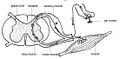 A reflex arc
 -
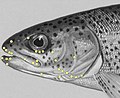 Fish face nociceptors
 -
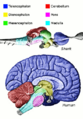 Vertebrate brain regions
 -
 Fish Surgery
 -
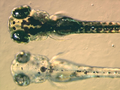 Zebrafish embryos
 -
 Common carp
.jpg)


.jpg)


Medical Disclaimer: WikiMD is for informational purposes only and is not a substitute for professional medical advice. Content may be inaccurate or outdated and should not be used for diagnosis or treatment. Always consult your healthcare provider for medical decisions. Verify information with trusted sources such as CDC.gov and NIH.gov. By using this site, you agree that WikiMD is not liable for any outcomes related to its content. See full disclaimer.
Credits:Most images are courtesy of Wikimedia commons, and templates, categories Wikipedia, licensed under CC BY SA or similar.
Translate page: - East Asian
中文,
日本,
한국어,
South Asian
हिन्दी,
தமிழ்,
తెలుగు,
Urdu,
ಕನ್ನಡ,
Southeast Asian
Indonesian,
Vietnamese,
Thai,
မြန်မာဘာသာ,
বাংলা
European
español,
Deutsch,
français,
Greek,
português do Brasil,
polski,
română,
русский,
Nederlands,
norsk,
svenska,
suomi,
Italian
Middle Eastern & African
عربى,
Turkish,
Persian,
Hebrew,
Afrikaans,
isiZulu,
Kiswahili,
Other
Bulgarian,
Hungarian,
Czech,
Swedish,
മലയാളം,
मराठी,
ਪੰਜਾਬੀ,
ગુજરાતી,
Portuguese,
Ukrainian

