Ngapi
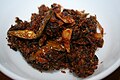
Ngapi is a generic term for fermented fish paste and shrimp paste in Burmese cuisine. It is a fundamental ingredient in many dishes and is used as a condiment and flavor enhancer. Ngapi is typically made from fish or shrimp mixed with salt, and then fermented under sunlight. The paste is usually pungent and is an acquired taste.
History[edit]
The use of Ngapi dates back to the Bagan Dynasty in the 11th century. It was a staple food for the Burmese people, especially those living in coastal regions where fish and shrimp were abundant. The method of fermentation was a practical way to preserve seafood in a tropical climate.
Production[edit]
Ngapi is produced in many regions of Myanmar, each with its unique recipe and flavor. The most famous Ngapi comes from the Rakhine State, known for its strong flavor and spicy taste. The fish or shrimp is first cleaned, then mixed with salt and left to ferment under the sun for several weeks. The mixture is then ground into a paste.
Usage[edit]
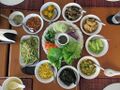
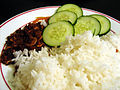
Ngapi is used in a variety of dishes in Burmese cuisine. It can be eaten raw, cooked, roasted, or sun-dried. It is also used as a base for soups and sauces. One popular dish is Ngapi daung, a spicy relish made from Ngapi, chili, and garlic. Ngapi is also used in Mohinga, a traditional Burmese fish noodle soup.
Health Benefits[edit]
Ngapi is rich in protein, vitamin B12, and other essential nutrients. However, due to its high salt content, it should be consumed in moderation.
See Also[edit]
| Burmese cuisine | ||||||||||||||||||||||
|---|---|---|---|---|---|---|---|---|---|---|---|---|---|---|---|---|---|---|---|---|---|---|
|

-
 Ngapi
Ngapi -
 Ngapi
Ngapi -
 Ngapi
Ngapi -
 Ngapi
Ngapi -
 Ngapi
Ngapi


.jpg)


Medical Disclaimer: WikiMD is for informational purposes only and is not a substitute for professional medical advice. Content may be inaccurate or outdated and should not be used for diagnosis or treatment. Always consult your healthcare provider for medical decisions. Verify information with trusted sources such as CDC.gov and NIH.gov. By using this site, you agree that WikiMD is not liable for any outcomes related to its content. See full disclaimer.
Credits:Most images are courtesy of Wikimedia commons, and templates, categories Wikipedia, licensed under CC BY SA or similar.
Translate page: - East Asian
中文,
日本,
한국어,
South Asian
हिन्दी,
தமிழ்,
తెలుగు,
Urdu,
ಕನ್ನಡ,
Southeast Asian
Indonesian,
Vietnamese,
Thai,
မြန်မာဘာသာ,
বাংলা
European
español,
Deutsch,
français,
Greek,
português do Brasil,
polski,
română,
русский,
Nederlands,
norsk,
svenska,
suomi,
Italian
Middle Eastern & African
عربى,
Turkish,
Persian,
Hebrew,
Afrikaans,
isiZulu,
Kiswahili,
Other
Bulgarian,
Hungarian,
Czech,
Swedish,
മലയാളം,
मराठी,
ਪੰਜਾਬੀ,
ગુજરાતી,
Portuguese,
Ukrainian

