Long interspersed nuclear element
Long Interspersed Nuclear Elements (LINEs) are a group of non-LTR retrotransposons that are widespread in the genomes of many eukaryotes. Among the most studied LINEs are the LINE-1 (L1) elements in humans, which account for approximately 17% of the human genome. LINEs are capable of retrotransposition, a process by which they can copy themselves to another location within the genome. This activity has significant implications for genetic diversity, mutation, and the evolution of genomes.
Characteristics[edit]
LINEs are typically several thousand base pairs in length. They encode two proteins required for retrotransposition: a reverse transcriptase and an endonuclease. These proteins allow LINEs to transcribe themselves into RNA, then back into DNA to be inserted at a new location in the genome. Unlike short interspersed nuclear elements (SINEs), LINEs are capable of autonomous retrotransposition because they encode the necessary machinery for their own transposition.
Function and Impact[edit]
The activity of LINEs can have various effects on the host genome. While often neutral, their insertion can sometimes disrupt gene function or regulatory regions, leading to mutations that may contribute to disease or cancer. On the other hand, LINEs have also played a role in shaping the structure and evolution of eukaryotic genomes by generating genetic diversity and contributing to gene duplication and the creation of new genes.
LINE-1 in Humans[edit]
LINE-1, or L1, elements are the only currently active family of LINEs in the human genome, with approximately 500,000 copies. However, only a small fraction of these are capable of retrotransposition. L1 activity is tightly regulated in normal tissues but can be deregulated in certain cancers, leading to increased retrotransposition events that may contribute to cancer progression.
Research and Applications[edit]
Understanding the mechanisms of LINE retrotransposition and its regulation has significant implications for genetics, molecular biology, and medicine. Research into LINEs has also led to the development of novel genetic engineering and gene therapy techniques, leveraging their ability to insert specific sequences into the genome.
See Also[edit]

Long_interspersed_nuclear_element[edit]
-
LINE-1 Retrotransposon ORF2p
-
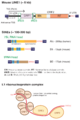 LINE1s and SINEs
 -
LINE reverse transcription


Medical Disclaimer: WikiMD is for informational purposes only and is not a substitute for professional medical advice. Content may be inaccurate or outdated and should not be used for diagnosis or treatment. Always consult your healthcare provider for medical decisions. Verify information with trusted sources such as CDC.gov and NIH.gov. By using this site, you agree that WikiMD is not liable for any outcomes related to its content. See full disclaimer.
Credits:Most images are courtesy of Wikimedia commons, and templates, categories Wikipedia, licensed under CC BY SA or similar.
Translate page: - East Asian
中文,
日本,
한국어,
South Asian
हिन्दी,
தமிழ்,
తెలుగు,
Urdu,
ಕನ್ನಡ,
Southeast Asian
Indonesian,
Vietnamese,
Thai,
မြန်မာဘာသာ,
বাংলা
European
español,
Deutsch,
français,
Greek,
português do Brasil,
polski,
română,
русский,
Nederlands,
norsk,
svenska,
suomi,
Italian
Middle Eastern & African
عربى,
Turkish,
Persian,
Hebrew,
Afrikaans,
isiZulu,
Kiswahili,
Other
Bulgarian,
Hungarian,
Czech,
Swedish,
മലയാളം,
मराठी,
ਪੰਜਾਬੀ,
ગુજરાતી,
Portuguese,
Ukrainian


