Lemonade fruit
Lemonade fruit is a hybrid citrus fruit that is a cross between a lemon and a navel orange or a pomelo. It is known for its sweet and tangy flavor, similar to that of lemonade, hence the name.
History[edit]
The lemonade fruit was first cultivated in Australia in the late 20th century. It is believed to have originated from a natural cross-pollination between a lemon and a navel orange or pomelo.
Description[edit]
The lemonade fruit is similar in size to a lemon but has a sweeter taste. The skin is thin and smooth, with a bright yellow color. The flesh is juicy and less acidic than a lemon, making it more palatable to eat raw.
Cultivation[edit]
Lemonade fruit trees are evergreen and can grow up to 20 feet tall. They prefer a sunny location and well-drained soil. The trees are self-fertile, meaning they do not require another tree for pollination. The fruit is typically harvested in the winter months.
Uses[edit]
Lemonade fruit can be used in a variety of culinary applications. It can be eaten raw, used in salads, or used to make juice, jams, and desserts. It is also used in cocktails and other beverages due to its sweet and tangy flavor.
Health Benefits[edit]
Like other citrus fruits, lemonade fruit is high in vitamin C and other antioxidants. It also contains dietary fiber and is low in calories, making it a healthy choice for a snack or addition to meals.
See Also[edit]

-
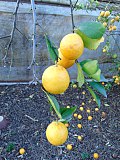 Lemonade fruit

Advertise on WikiMD — 81,000+ full articles, ~900,000 total pages, ~250 million page views. Global reach, limited time promotional rates from $1/page/day. Learn more · View stats

Translate page: - East Asian
中文,
日本,
한국어,
South Asian
हिन्दी,
தமிழ்,
తెలుగు,
Urdu,
ಕನ್ನಡ,
Southeast Asian
Indonesian,
Vietnamese,
Thai,
မြန်မာဘာသာ,
বাংলা
European
español,
Deutsch,
français,
Greek,
português do Brasil,
polski,
română,
русский,
Nederlands,
norsk,
svenska,
suomi,
Italian
Middle Eastern & African
عربى,
Turkish,
Persian,
Hebrew,
Afrikaans,
isiZulu,
Kiswahili,
Other
Bulgarian,
Hungarian,
Czech,
Swedish,
മലയാളം,
मराठी,
ਪੰਜਾਬੀ,
ગુજરાતી,
Portuguese,
Ukrainian
About WikiMD • Contact • Disclaimer • Privacy • Copyright • Site statistics
Some content and images may originate from Wikimedia Commons or Wikipedia and remain subject to their stated licenses. Unless otherwise noted, eligible WikiMD content is available under CC BY-SA 4.0.
WikiMD Wellnesspedia — Free health & wellness information for patients, students, and health professionals.

