Lanthanide
Lanthanide
The lanthanides, also known as the lanthanoids, are a series of chemical elements in the periodic table with atomic numbers from 57 to 71, from lanthanum through to lutetium. These elements, along with scandium and yttrium, are often collectively known as the rare earth elements.
Properties[edit]
Lanthanides are characterized by their high atomic and ionic sizes, and they exhibit a +3 oxidation state in most of their compounds. They are known for their magnetic, catalytic, and luminescent properties, which make them valuable in various technological applications.
Physical Properties[edit]
Lanthanides are typically silvery-white metals that are soft and malleable. They have high melting and boiling points, and they are good conductors of electricity. The lanthanides are known for their ability to form alloys with other metals, enhancing the properties of the base metal.
Chemical Properties[edit]
The lanthanides are highly reactive, especially when finely divided or in the presence of moisture. They readily oxidize in air, forming a tarnish. The reactivity of lanthanides increases with atomic number, and they can react with water to form hydroxides and hydrogen gas.
Applications[edit]
Lanthanides have a wide range of applications due to their unique properties. They are used in the production of strong permanent magnets, phosphors for color television tubes and LED lights, catalysts in petroleum refining, and in various other high-tech applications.
Magnets[edit]
Neodymium, a lanthanide, is used to make powerful permanent magnets, which are essential components in many electronic devices, including hard drives, wind turbines, and electric vehicle motors.
Phosphors[edit]
Lanthanides such as europium and terbium are used in phosphors that emit red and green light, respectively. These phosphors are crucial in the manufacturing of color displays and LED lighting.
Catalysts[edit]
Lanthanides are used as catalysts in various industrial processes, including the cracking of crude oil in petroleum refineries. Cerium, in particular, is used in catalytic converters to reduce emissions from vehicles.
Biological Role[edit]
Lanthanides have no known biological role in humans, but they are used in some medical applications. For example, gadolinium is used as a contrast agent in magnetic resonance imaging (MRI) due to its paramagnetic properties.
Environmental Impact[edit]
The mining and processing of lanthanides can have significant environmental impacts, including habitat destruction and pollution. Efforts are being made to develop more sustainable methods of extraction and recycling of these elements.
See Also[edit]
External Links[edit]
- [Lanthanide Series on Wikipedia](https://en.wikipedia.org/wiki/Lanthanide)
| Branches of chemistry | ||||||||||
|---|---|---|---|---|---|---|---|---|---|---|
|
Lanthanide[edit]
-
 Lanthanum
 -
 Cerium
 -
 Praseodymium
 -
 Neodymium
 -
 Promethium
 -
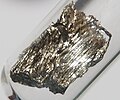 Samarium
 -
 Europium
 -
 Gadolinium
 -
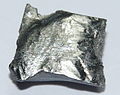 Terbium
 -
 Dysprosium
 -
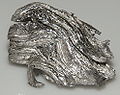 Holmium
 -
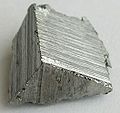 Erbium


Sponsored Health Resource

W8MD Weight Loss, Sleep & MedSpa
Looking for physician-supervised weight loss, semaglutide, tirzepatide, or GLP-1 receptor agonist options? W8MD helps eligible patients in New York City, Brooklyn, New Jersey, Connecticut, Pennsylvania, Delaware, and greater Philadelphia with medical weight loss, sleep medicine, and long-term maintenance support.
GLP-1 specials: Affordable GLP-1 injections NYC and Philadelphia starting from $29.99/week and up for semaglutide with insurance accepted for qualifying visits, and $45/week and up for tirzepatide with insurance accepted for qualifying visits. Self-pay options start from $59.99/week and up for semaglutide and $69.99/week and up for tirzepatide.
- Medical weight loss NYC
- Affordable GLP-1 injections NYC
- Budget GLP-1 weight loss shots Philadelphia
- New Jersey medical weight loss
- NYC medical weight loss blog
- Philadelphia weight loss blog
- Sleep medicine and sleep apnea services
- W8MD MedSpa and wellness
Book a W8MD appointment · View GLP-1 specials
Paid promotional message. Eligibility, pricing, insurance coverage, medication availability, and results vary. Medical evaluation required.

Medical Disclaimer: WikiMD is for informational purposes only and is not a substitute for professional medical advice. Content may be inaccurate or outdated and should not be used for diagnosis or treatment. Always consult your healthcare provider for medical decisions. Verify information with trusted sources such as CDC.gov and NIH.gov. By using this site, you agree that WikiMD is not liable for any outcomes related to its content. See full disclaimer.
Credits:Most images are courtesy of Wikimedia commons, and templates, categories Wikipedia, licensed under CC BY SA or similar.
Translate page: - East Asian
中文,
日本,
한국어,
South Asian
हिन्दी,
தமிழ்,
తెలుగు,
Urdu,
ಕನ್ನಡ,
Southeast Asian
Indonesian,
Vietnamese,
Thai,
မြန်မာဘာသာ,
বাংলা
European
español,
Deutsch,
français,
Greek,
português do Brasil,
polski,
română,
русский,
Nederlands,
norsk,
svenska,
suomi,
Italian
Middle Eastern & African
عربى,
Turkish,
Persian,
Hebrew,
Afrikaans,
isiZulu,
Kiswahili,
Other
Bulgarian,
Hungarian,
Czech,
Swedish,
മലയാളം,
मराठी,
ਪੰਜਾਬੀ,
ગુજરાતી,
Portuguese,
Ukrainian

