Isotope
An Isotope is a variant of a particular chemical element which differs in neutron number. All isotopes of a given element have the same number of protons but different numbers of neutrons in each atom.
Characteristics[edit]
Isotopes are distinguished by their mass number, which is the total number of protons and neutrons in the atomic nucleus. Isotopes are not separated in the periodic table; they are always grouped under a single element. Isotopes of the same element have almost identical chemical behavior, but they have different physical properties. Some isotopes are radioactive and are called radioisotopes, while others are stable.
Uses[edit]
Isotopes have many practical applications, including medicine, archaeology, and geology. In medicine, they are used in diagnostic imaging and in radiation therapy for cancer. In archaeology, isotopes are used in radiocarbon dating. In geology, isotopes are used to date rocks and to investigate the processes of earth and climate change.
Types of Isotopes[edit]
There are two types of isotopes: stable and radioactive. Stable isotopes do not decay into other elements. In contrast, radioactive isotopes decay over time. The rate of decay is specific to each isotope and is described by the half-life.
See also[edit]
References[edit]

This WikiMD article can only be edited by registered and verified editors. You can log in or register.
-
 Hydrogen, Deuterium, and Tritium Nuclei Schematic
 -
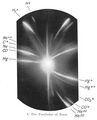 Discovery of Neon Isotopes
 -
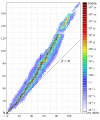 Isotopes and Half-life


Medical Disclaimer: WikiMD is for informational purposes only and is not a substitute for professional medical advice. Content may be inaccurate or outdated and should not be used for diagnosis or treatment. Always consult your healthcare provider for medical decisions. Verify information with trusted sources such as CDC.gov and NIH.gov. By using this site, you agree that WikiMD is not liable for any outcomes related to its content. See full disclaimer.
Credits:Most images are courtesy of Wikimedia commons, and templates, categories Wikipedia, licensed under CC BY SA or similar.
Translate page: - East Asian
中文,
日本,
한국어,
South Asian
हिन्दी,
தமிழ்,
తెలుగు,
Urdu,
ಕನ್ನಡ,
Southeast Asian
Indonesian,
Vietnamese,
Thai,
မြန်မာဘာသာ,
বাংলা
European
español,
Deutsch,
français,
Greek,
português do Brasil,
polski,
română,
русский,
Nederlands,
norsk,
svenska,
suomi,
Italian
Middle Eastern & African
عربى,
Turkish,
Persian,
Hebrew,
Afrikaans,
isiZulu,
Kiswahili,
Other
Bulgarian,
Hungarian,
Czech,
Swedish,
മലയാളം,
मराठी,
ਪੰਜਾਬੀ,
ગુજરાતી,
Portuguese,
Ukrainian

