Game pie
Game pie is a traditional British dish that consists of various types of game meat such as pheasant, hare, and venison. The meat is often combined with other ingredients, including vegetables and herbs, and baked in a pie crust. Game pies have a rich history in British cuisine and are often associated with the autumn and winter months, when game is traditionally hunted.
History[edit]
The tradition of making game pies dates back to the Roman Empire, when they were made with a variety of meats, including game. The pies were often used as a way to preserve the meat. In the Middle Ages, game pies became a popular dish among the nobility in Britain. They were often made with a hot water crust pastry, which was strong enough to hold the filling and could be eaten cold, making it a practical dish for hunting parties.
In the 19th century, game pies became a staple of British cuisine. They were often served at banquets and large gatherings. The pies were typically made with a mixture of game meats, and were often highly decorated.
Preparation[edit]
The preparation of a game pie begins with the selection of game meats. The meats are often marinated in wine or brandy, and then cooked slowly to tenderize them. The meat is then combined with other ingredients, such as onions, carrots, and herbs, and placed in a pie crust. The pie is then baked until the crust is golden brown.
Variations[edit]
There are many variations of game pie, depending on the types of game meat used and the additional ingredients included. Some game pies include only one type of game meat, while others include a mixture. Some pies may also include other meats, such as pork or beef, to complement the game.
See also[edit]
References[edit]
| British cuisine |
|---|
 |
| National cuisines |
| Regional cuisines |
| Overseas/Fusion cuisine |
| People |
| Pies | ||||||||
|---|---|---|---|---|---|---|---|---|
|

-
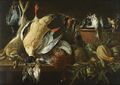 Still Life with Games and Vegetables
 -
Substitutes for bread; or right honorables, saving the loaves, and dividing the fishes
-
Game pie


Medical Disclaimer: WikiMD is for informational purposes only and is not a substitute for professional medical advice. Content may be inaccurate or outdated and should not be used for diagnosis or treatment. Always consult your healthcare provider for medical decisions. Verify information with trusted sources such as CDC.gov and NIH.gov. By using this site, you agree that WikiMD is not liable for any outcomes related to its content. See full disclaimer.
Credits:Most images are courtesy of Wikimedia commons, and templates, categories Wikipedia, licensed under CC BY SA or similar.
Translate page: - East Asian
中文,
日本,
한국어,
South Asian
हिन्दी,
தமிழ்,
తెలుగు,
Urdu,
ಕನ್ನಡ,
Southeast Asian
Indonesian,
Vietnamese,
Thai,
မြန်မာဘာသာ,
বাংলা
European
español,
Deutsch,
français,
Greek,
português do Brasil,
polski,
română,
русский,
Nederlands,
norsk,
svenska,
suomi,
Italian
Middle Eastern & African
عربى,
Turkish,
Persian,
Hebrew,
Afrikaans,
isiZulu,
Kiswahili,
Other
Bulgarian,
Hungarian,
Czech,
Swedish,
മലയാളം,
मराठी,
ਪੰਜਾਬੀ,
ગુજરાતી,
Portuguese,
Ukrainian


