Biomanufacturing
Biomanufacturing is a branch of biotechnology that focuses on the production of therapeutic proteins, vaccines, and other biologics on a large scale. It involves the use of living systems, such as microorganisms or cell cultures, to manufacture bioproducts. This field plays a critical role in the pharmaceutical and biotechnological industries, providing the means to produce medicines and vaccines that are essential for public health.
Overview[edit]
Biomanufacturing utilizes various bioreactors and fermentation processes to cultivate cells or microorganisms that have been genetically engineered to produce a specific bioproduct. The process involves several stages, including upstream processing, where the cells are grown and the product is produced, and downstream processing, where the product is purified and prepared for distribution.
Technologies[edit]
Several key technologies are employed in biomanufacturing, including:
- Recombinant DNA technology, which allows for the insertion of genes encoding desired products into host cells.
- Cell culture techniques, which are used to grow eukaryotic cells in controlled environments.
- Fermentation technology, which involves the cultivation of microorganisms under controlled conditions to produce desired bioproducts.
- Purification techniques, such as chromatography and filtration, which are essential for isolating and purifying the bioproducts from the cell culture medium.
Applications[edit]
Biomanufacturing has a wide range of applications in the medical and pharmaceutical fields. Some of the key applications include:
- Production of therapeutic proteins, such as insulin, monoclonal antibodies, and hormones.
- Manufacturing of vaccines to prevent various infectious diseases.
- Production of enzymes for use in industrial processes and products.
- Development of gene therapy vectors and cell therapy products for treating genetic and acquired diseases.
Challenges[edit]
Despite its significant benefits, biomanufacturing faces several challenges, including:
- High costs associated with the development and production of biologics.
- Complex regulatory requirements for the approval of biomanufactured products.
- Technical challenges related to the scale-up of production processes.
- Ensuring the quality and safety of biomanufactured products.
Future Directions[edit]
The field of biomanufacturing is continuously evolving, with ongoing research focused on improving production efficiencies, reducing costs, and developing new bioproducts. Advances in synthetic biology, genome editing, and automation are expected to drive future innovations in biomanufacturing.

-
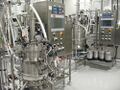 BTEC Bioreactors

Sponsored Health Resource

W8MD Weight Loss, Sleep & MedSpa
Looking for physician-supervised weight loss, semaglutide, tirzepatide, or GLP-1 receptor agonist options? W8MD helps eligible patients in New York City, Brooklyn, New Jersey, Connecticut, Pennsylvania, Delaware, and greater Philadelphia with medical weight loss, sleep medicine, and long-term maintenance support.
GLP-1 specials: Affordable GLP-1 injections NYC and Philadelphia starting from $29.99/week and up for semaglutide with insurance accepted for qualifying visits, and $45/week and up for tirzepatide with insurance accepted for qualifying visits. Self-pay options start from $59.99/week and up for semaglutide and $69.99/week and up for tirzepatide.
Medical weight loss NYC | Affordable GLP-1 injections NYC | Budget GLP-1 weight loss shots Philadelphia | New Jersey medical weight loss | NYC medical weight loss | Philadelphia medical weight loss | Sleep clinic NYC | W8MD's Philadelphia GLP-1 doctor | Weight loss prescriptions NYC
Book a W8MD appointment · View GLP-1 specials
Paid promotional message. Eligibility, pricing, insurance coverage, medication availability, and results vary. Medical evaluation required.

Medical Disclaimer: WikiMD is for informational purposes only and is not a substitute for professional medical advice. Content may be inaccurate or outdated and should not be used for diagnosis or treatment. Always consult your healthcare provider for medical decisions. Verify information with trusted sources such as CDC.gov and NIH.gov. By using this site, you agree that WikiMD is not liable for any outcomes related to its content. See full disclaimer.
Credits:Most images are courtesy of Wikimedia commons, and templates, categories Wikipedia, licensed under CC BY SA or similar.
Translate page: - East Asian
中文,
日本,
한국어,
South Asian
हिन्दी,
தமிழ்,
తెలుగు,
Urdu,
ಕನ್ನಡ,
Southeast Asian
Indonesian,
Vietnamese,
Thai,
မြန်မာဘာသာ,
বাংলা
European
español,
Deutsch,
français,
Greek,
português do Brasil,
polski,
română,
русский,
Nederlands,
norsk,
svenska,
suomi,
Italian
Middle Eastern & African
عربى,
Turkish,
Persian,
Hebrew,
Afrikaans,
isiZulu,
Kiswahili,
Other
Bulgarian,
Hungarian,
Czech,
Swedish,
മലയാളം,
मराठी,
ਪੰਜਾਬੀ,
ગુજરાતી,
Portuguese,
Ukrainian

