Acute prostatitis
| Acute prostatitis | |
|---|---|

| |
| Synonyms | N/A |
| Pronounce | N/A |
| Specialty | N/A |
| Symptoms | Pelvic pain, urinary frequency, dysuria, fever, chills |
| Complications | Chronic prostatitis, prostatic abscess |
| Onset | Sudden |
| Duration | Days to weeks |
| Types | N/A |
| Causes | Bacterial infection |
| Risks | Urinary tract infection, catheterization, prostate biopsy |
| Diagnosis | Digital rectal examination, urine culture |
| Differential diagnosis | Chronic prostatitis, benign prostatic hyperplasia, prostate cancer |
| Prevention | N/A |
| Treatment | Antibiotics, pain management |
| Medication | Fluoroquinolones, trimethoprim/sulfamethoxazole |
| Prognosis | N/A |
| Frequency | Common in men aged 20-50 |
| Deaths | N/A |
Acute prostatitis is a sudden inflammation of the prostate gland, a small gland located below the urinary bladder in males. This condition is often caused by a bacterial infection and can lead to severe symptoms that require prompt medical attention.
Pathophysiology[edit]
Acute prostatitis is typically caused by a bacterial infection, often involving Escherichia coli or other Gram-negative bacteria. The infection can reach the prostate through the urethra, the bloodstream, or the lymphatic system. The inflammation results in swelling and pain, and can lead to the formation of prostate abscesses.


Symptoms[edit]
The symptoms of acute prostatitis can include:
- Severe pain in the pelvic area, lower back, or genital region
- Fever and chills
- Difficulty urinating, such as a weak stream or painful urination
- Frequent urge to urinate, especially at night
- Painful ejaculation
Diagnosis[edit]
Diagnosis of acute prostatitis is based on clinical evaluation, including a physical examination and medical history. A digital rectal examination (DRE) may reveal a tender, swollen prostate. Laboratory tests such as a urinalysis and urine culture can help identify the causative bacteria.

Treatment[edit]
The primary treatment for acute prostatitis is antibiotic therapy, which is usually effective in resolving the infection. Commonly prescribed antibiotics include fluoroquinolones and trimethoprim-sulfamethoxazole. Pain management and supportive care, such as nonsteroidal anti-inflammatory drugs (NSAIDs) and alpha-blockers, may also be used to alleviate symptoms.
Complications[edit]
If left untreated, acute prostatitis can lead to complications such as:
- Prostate abscess
- Chronic prostatitis
- Sepsis
Prevention[edit]
Preventive measures for acute prostatitis include practicing good hygiene, staying hydrated, and avoiding activities that can irritate the prostate, such as prolonged sitting or cycling.
Related Pages[edit]
Gallery[edit]
-
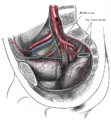 Diagram of the male reproductive system.
 -
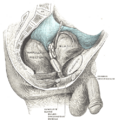 Anatomy of the male pelvis.
 -
 Histological image showing acute inflammation of the prostate.


Acute_prostatitis[edit]

Medical Disclaimer: WikiMD is for informational purposes only and is not a substitute for professional medical advice. Content may be inaccurate or outdated and should not be used for diagnosis or treatment. Always consult your healthcare provider for medical decisions. Verify information with trusted sources such as CDC.gov and NIH.gov. By using this site, you agree that WikiMD is not liable for any outcomes related to its content. See full disclaimer.
Credits:Most images are courtesy of Wikimedia commons, and templates, categories Wikipedia, licensed under CC BY SA or similar.
Translate page: - East Asian
中文,
日本,
한국어,
South Asian
हिन्दी,
தமிழ்,
తెలుగు,
Urdu,
ಕನ್ನಡ,
Southeast Asian
Indonesian,
Vietnamese,
Thai,
မြန်မာဘာသာ,
বাংলা
European
español,
Deutsch,
français,
Greek,
português do Brasil,
polski,
română,
русский,
Nederlands,
norsk,
svenska,
suomi,
Italian
Middle Eastern & African
عربى,
Turkish,
Persian,
Hebrew,
Afrikaans,
isiZulu,
Kiswahili,
Other
Bulgarian,
Hungarian,
Czech,
Swedish,
മലയാളം,
मराठी,
ਪੰਜਾਬੀ,
ગુજરાતી,
Portuguese,
Ukrainian

