Bioconjugation
Bioconjugation
Bioconjugation is a chemical strategy used to form a stable covalent link between two molecules, one of which is typically a biomolecule. This process is crucial in the development of various biotechnological and therapeutic applications, including the creation of antibody-drug conjugates, biosensors, and imaging agents.
Overview[edit]
Bioconjugation involves the attachment of a biomolecule, such as a protein, nucleic acid, or carbohydrate, to another molecule, which can be a small synthetic compound, another biomolecule, or a nanoparticle. The goal is to combine the unique properties of each component to create a new entity with enhanced or novel functionalities.
Techniques[edit]
Several techniques are employed in bioconjugation, each with its own advantages and limitations. Some of the most common methods include:
Amide Bond Formation[edit]
Amide bond formation is one of the most widely used bioconjugation techniques. It involves the reaction between a carboxylic acid group and an amine group to form an amide bond. This method is often used to attach peptides to other molecules.
Click Chemistry[edit]
Click chemistry is a class of bioconjugation reactions that are highly efficient, selective, and occur under mild conditions. The most popular click chemistry reaction is the copper-catalyzed azide-alkyne cycloaddition (CuAAC), which forms a stable triazole linkage.
Thiol-Maleimide Reaction[edit]
The thiol-maleimide reaction is a specific and efficient method for conjugating molecules containing thiol groups, such as cysteine residues in proteins, to maleimide-functionalized compounds.
Enzymatic Conjugation[edit]
Enzymatic methods utilize enzymes to catalyze the formation of covalent bonds between biomolecules. These methods are often highly specific and can occur under physiological conditions.
Applications[edit]
Bioconjugation has a wide range of applications in various fields:
Therapeutics[edit]
In therapeutics, bioconjugation is used to create antibody-drug conjugates (ADCs), which are designed to deliver cytotoxic drugs specifically to cancer cells, minimizing damage to healthy tissues.
Diagnostics[edit]
Bioconjugation is employed in the development of biosensors and diagnostic assays, where biomolecules are conjugated to reporter molecules to detect specific analytes.
Imaging[edit]
In medical imaging, bioconjugation is used to attach imaging agents to targeting molecules, allowing for the visualization of specific tissues or disease sites.
Challenges[edit]
Despite its many applications, bioconjugation faces several challenges, including:
- Specificity: Achieving selective conjugation without affecting the biological activity of the biomolecule.
- Stability: Ensuring the stability of the conjugate under physiological conditions.
- Scalability: Developing methods that are scalable for industrial applications.
Also see[edit]
| Biotechnology | ||||||||||
|---|---|---|---|---|---|---|---|---|---|---|
|
| Branches of chemistry | ||||||||||
|---|---|---|---|---|---|---|---|---|---|---|
|
-
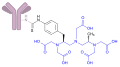 Ibritumomab tiuxetan structure
 -
 Bioconjugation strategies for lysine residues
 -
 Bioconjugation strategies for cysteine residues
 -
 Bioconjugation strategies for tyrosine residues
 -
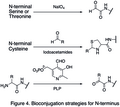 Bioconjugation strategies for N-terminus
 -
 Bioconjugation strategies for C-terminus
 -
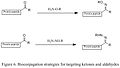 Bioconjugation strategies for targeting ketones and aldehydes
 -
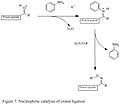 Nucleophilic catalysis of oxime ligation


Ad. Transform your health with W8MD Weight Loss, Sleep & MedSpa

Tired of being overweight?
Special offer:
Budget GLP-1 weight loss medications
- Semaglutide starting from $29.99/week and up with insurance for visit of $59.99 and up per week self pay.
- Tirzepatide starting from $45.00/week and up (dose dependent) or $69.99/week and up self pay
✔ Same-week appointments, evenings & weekends
Learn more:
- GLP-1 weight loss clinic NYC
- W8MD's NYC medical weight loss
- W8MD Philadelphia GLP-1 shots
- Philadelphia GLP-1 injections
- Affordable GLP-1 shots NYC
|
WikiMD Medical Encyclopedia |
Medical Disclaimer: WikiMD is for informational purposes only and is not a substitute for professional medical advice. Content may be inaccurate or outdated and should not be used for diagnosis or treatment. Always consult your healthcare provider for medical decisions. Verify information with trusted sources such as CDC.gov and NIH.gov. By using this site, you agree that WikiMD is not liable for any outcomes related to its content. See full disclaimer.
Credits:Most images are courtesy of Wikimedia commons, and templates, categories Wikipedia, licensed under CC BY SA or similar.
Translate this page: - East Asian
中文,
日本,
한국어,
South Asian
हिन्दी,
தமிழ்,
తెలుగు,
Urdu,
ಕನ್ನಡ,
Southeast Asian
Indonesian,
Vietnamese,
Thai,
မြန်မာဘာသာ,
বাংলা
European
español,
Deutsch,
français,
Greek,
português do Brasil,
polski,
română,
русский,
Nederlands,
norsk,
svenska,
suomi,
Italian
Middle Eastern & African
عربى,
Turkish,
Persian,
Hebrew,
Afrikaans,
isiZulu,
Kiswahili,
Other
Bulgarian,
Hungarian,
Czech,
Swedish,
മലയാളം,
मराठी,
ਪੰਜਾਬੀ,
ગુજરાતી,
Portuguese,
Ukrainian
