Mantecada
Mantecada is a type of sweet bread traditionally from Spain. It is a product of the pastry and baking industry, and it is popular in all Spanish-speaking countries, including Mexico, where it is a common breakfast item.
Origin and History
The mantecada was first created in the town of Astorga, Spain, where it is still produced today following the traditional recipe. The name "mantecada" comes from the Spanish word "manteca", which means lard, a key ingredient in the original recipe.
Ingredients and Preparation
The main ingredients of a mantecada are eggs, flour, sugar, and lard. The traditional method of preparation involves beating the eggs and sugar together until they form a creamy mixture, then slowly adding the flour and lard. The dough is then poured into individual molds and baked until golden brown.
Variations
There are many variations of the mantecada throughout the Spanish-speaking world. In Mexico, for example, mantecadas are often flavored with vanilla or cocoa, and may be topped with a sprinkling of sugar. In the Philippines, a former Spanish colony, mantecadas are known as mamon and are typically softer and more buttery than their Spanish counterparts.
Cultural Significance
Mantecadas are often served at breakfast or as a snack with coffee or hot chocolate. They are also a popular choice for celebrations and special occasions. In Spain, they are traditionally eaten during the Christmas season.
See Also
| Spanish cuisine | ||||||||||
|---|---|---|---|---|---|---|---|---|---|---|
This Spanish cuisine related article is a stub.
|
| Mexican cuisine | ||||||||||
|---|---|---|---|---|---|---|---|---|---|---|
|


Mantecada
-
 Mantecada
 -
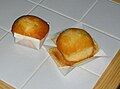 Mantecadas de Tuesta-Valdegovía
Ad. Transform your life with W8MD's
GLP-1 weight loss injections special from $29.99 with insurance
|
WikiMD Medical Encyclopedia |
Medical Disclaimer: WikiMD is for informational purposes only and is not a substitute for professional medical advice. Content may be inaccurate or outdated and should not be used for diagnosis or treatment. Always consult your healthcare provider for medical decisions. Verify information with trusted sources such as CDC.gov and NIH.gov. By using this site, you agree that WikiMD is not liable for any outcomes related to its content. See full disclaimer.
Credits:Most images are courtesy of Wikimedia commons, and templates, categories Wikipedia, licensed under CC BY SA or similar.
Translate this page: - East Asian
中文,
日本,
한국어,
South Asian
हिन्दी,
தமிழ்,
తెలుగు,
Urdu,
ಕನ್ನಡ,
Southeast Asian
Indonesian,
Vietnamese,
Thai,
မြန်မာဘာသာ,
বাংলা
European
español,
Deutsch,
français,
Greek,
português do Brasil,
polski,
română,
русский,
Nederlands,
norsk,
svenska,
suomi,
Italian
Middle Eastern & African
عربى,
Turkish,
Persian,
Hebrew,
Afrikaans,
isiZulu,
Kiswahili,
Other
Bulgarian,
Hungarian,
Czech,
Swedish,
മലയാളം,
मराठी,
ਪੰਜਾਬੀ,
ગુજરાતી,
Portuguese,
Ukrainian
