Dithiocarbamate
Dithiocarbamate is a class of organic compounds characterized by the functional group R2NCS2^-, where R can be hydrogen, alkyl, aryl, or other substituents. These compounds are widely used in various applications, including agriculture as pesticides, in rubber industry as vulcanization accelerators, and in medicine for their therapeutic properties. Dithiocarbamates are known for their fungicidal, bactericidal, and chelating properties.
Chemistry
Dithiocarbamates are derived from carbon disulfide and amines. The general synthesis involves the reaction of carbon disulfide with amines in the presence of an alkali, leading to the formation of dithiocarbamate salts. These salts can be further modified to produce various derivatives with different properties and applications. The versatility of dithiocarbamates stems from the ability to alter the R groups, which significantly affects their chemical behavior and utility.
Applications
Agriculture
In agriculture, dithiocarbamates serve primarily as fungicides to protect crops against a wide range of fungal diseases. They are among the oldest classes of fungicides, with mancozeb, maneb, and zineb being some of the most commonly used examples. These compounds act by disrupting the normal metabolism of fungal cells, effectively controlling disease spread in crops.
Rubber Industry
Dithiocarbamates are employed as vulcanization accelerators in the rubber industry. They enhance the cross-linking efficiency between rubber molecules, improving the mechanical properties and durability of rubber products. Their fast curing rates and ability to produce rubber with excellent aging properties make them valuable in manufacturing tires, seals, and other rubber goods.
Medicine
In the medical field, certain dithiocarbamate derivatives exhibit therapeutic activities, including antifungal, antibacterial, and anticancer effects. For example, disulfiram, a dithiocarbamate derivative, is used in the treatment of alcohol dependence by inhibiting the enzyme acetaldehyde dehydrogenase, leading to unpleasant effects when alcohol is consumed.
Environmental and Health Concerns
Despite their beneficial uses, dithiocarbamates raise environmental and health concerns. They can decompose to form ethylene thiourea (ETU), a potential carcinogen, under certain conditions. The use of dithiocarbamate fungicides in agriculture has been scrutinized for their potential to leave residues on food and in the environment, leading to regulatory restrictions in some countries.
Conclusion
Dithiocarbamates play a significant role in various industries due to their fungicidal, bactericidal, and chelating properties. While they offer considerable benefits, their environmental and health impacts necessitate careful management and regulatory oversight to ensure safe use.

-
 Dithiocarbamate structure
 -
 Dithiocarbamate reaction scheme
 -
 Zinc dithiocarbamate complex
 -
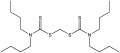 Dithiocarbamate ligand


2Improved.png)

Ad. Transform your health with W8MD Weight Loss, Sleep & MedSpa

Tired of being overweight?
Get started with evidence based, physician-supervised
affordable GLP-1 weight loss injections
Now available in New York City and Philadelphia:
- Semaglutide starting from $59.99/week and up
- Tirzepatide starting from $69.99/week and up (dose dependent)
✔ Evidence-based medical weight loss ✔ Insurance-friendly visits available ✔ Same-week appointments, evenings & weekends
Learn more:
Start your transformation today with W8MD weight loss centers.
|
WikiMD Medical Encyclopedia |
Medical Disclaimer: WikiMD is for informational purposes only and is not a substitute for professional medical advice. Content may be inaccurate or outdated and should not be used for diagnosis or treatment. Always consult your healthcare provider for medical decisions. Verify information with trusted sources such as CDC.gov and NIH.gov. By using this site, you agree that WikiMD is not liable for any outcomes related to its content. See full disclaimer.
Credits:Most images are courtesy of Wikimedia commons, and templates, categories Wikipedia, licensed under CC BY SA or similar.
Translate this page: - East Asian
中文,
日本,
한국어,
South Asian
हिन्दी,
தமிழ்,
తెలుగు,
Urdu,
ಕನ್ನಡ,
Southeast Asian
Indonesian,
Vietnamese,
Thai,
မြန်မာဘာသာ,
বাংলা
European
español,
Deutsch,
français,
Greek,
português do Brasil,
polski,
română,
русский,
Nederlands,
norsk,
svenska,
suomi,
Italian
Middle Eastern & African
عربى,
Turkish,
Persian,
Hebrew,
Afrikaans,
isiZulu,
Kiswahili,
Other
Bulgarian,
Hungarian,
Czech,
Swedish,
മലയാളം,
मराठी,
ਪੰਜਾਬੀ,
ગુજરાતી,
Portuguese,
Ukrainian
