Bladder stone: Difference between revisions
CSV import |
CSV import |
||
| Line 1: | Line 1: | ||
{{SI}} | |||
{{Infobox medical condition | |||
| name = Bladder stone | |||
| image = [[File:Urinary_Bladder_stone_04.jpg|250px]] | |||
| caption = A large bladder stone removed from a patient | |||
| field = [[Urology]] | |||
| synonyms = Vesical calculus, cystolith | |||
| symptoms = [[Hematuria]], [[dysuria]], [[urinary frequency]], [[urinary urgency]], [[urinary tract infection]] | |||
| complications = [[Urinary tract infection]], [[bladder damage]], [[urinary retention]] | |||
| onset = More common in adults, especially older males | |||
| duration = Can persist until treated | |||
| causes = [[Urinary tract infection]], [[bladder outlet obstruction]], [[neurogenic bladder]], [[foreign body]] in bladder | |||
| risks = [[Dehydration]], [[prostate enlargement]], [[bladder diverticulum]], [[neurogenic bladder]] | |||
| diagnosis = [[Urinalysis]], [[ultrasound]], [[CT scan]], [[cystoscopy]] | |||
| differential = [[Kidney stone]], [[bladder cancer]], [[urinary tract infection]] | |||
| prevention = Adequate hydration, treating underlying conditions | |||
| treatment = [[Cystolitholapaxy]], [[surgery]], treating underlying cause | |||
| medication = [[Antibiotics]] for infection, [[pain management]] | |||
| frequency = More common in regions with high prevalence of [[urinary tract infection]] | |||
| deaths = Rare, usually due to complications | |||
}} | |||
A '''bladder stone''' is a hard mass of minerals that forms in the [[bladder]]. This condition is also known as [[vesical calculus]] or [[cystolith]]. Bladder stones occur when minerals in urine concentrate and crystallize, forming stones. These stones can range in size from tiny grains to large, golf-ball-sized masses. | A '''bladder stone''' is a hard mass of minerals that forms in the [[bladder]]. This condition is also known as [[vesical calculus]] or [[cystolith]]. Bladder stones occur when minerals in urine concentrate and crystallize, forming stones. These stones can range in size from tiny grains to large, golf-ball-sized masses. | ||
==Causes== | ==Causes== | ||
Bladder stones are often caused by an inability to completely empty the bladder, a condition known as [[urinary retention]]. This can be due to a variety of underlying conditions, including [[bladder diverticulum]], [[neurogenic bladder]], and [[prostate enlargement]]. Other causes can include urinary tract infections, inflammation of the bladder, and foreign objects in the bladder. | Bladder stones are often caused by an inability to completely empty the bladder, a condition known as [[urinary retention]]. This can be due to a variety of underlying conditions, including [[bladder diverticulum]], [[neurogenic bladder]], and [[prostate enlargement]]. Other causes can include urinary tract infections, inflammation of the bladder, and foreign objects in the bladder. | ||
==Symptoms== | ==Symptoms== | ||
Symptoms of bladder stones can vary depending on the size of the stone. Small stones may not cause any symptoms and may pass unnoticed. Larger stones, however, can cause symptoms such as [[hematuria]] (blood in the urine), lower abdominal pain, frequent urination, painful urination, and urinary tract infections. | Symptoms of bladder stones can vary depending on the size of the stone. Small stones may not cause any symptoms and may pass unnoticed. Larger stones, however, can cause symptoms such as [[hematuria]] (blood in the urine), lower abdominal pain, frequent urination, painful urination, and urinary tract infections. | ||
==Diagnosis== | ==Diagnosis== | ||
Diagnosis of bladder stones typically involves a physical examination and a review of the patient's medical history. Additional tests may include a [[urinalysis]], [[ultrasound]], [[CT scan]], or [[cystoscopy]]. | Diagnosis of bladder stones typically involves a physical examination and a review of the patient's medical history. Additional tests may include a [[urinalysis]], [[ultrasound]], [[CT scan]], or [[cystoscopy]]. | ||
==Treatment== | ==Treatment== | ||
Treatment for bladder stones typically involves removing the stones. This can be done through a procedure known as a [[cystolitholapaxy]], in which a small instrument is inserted into the bladder to break up the stones. In some cases, surgery may be required to remove large stones. Treatment also involves addressing the underlying condition that caused the stones to form. | Treatment for bladder stones typically involves removing the stones. This can be done through a procedure known as a [[cystolitholapaxy]], in which a small instrument is inserted into the bladder to break up the stones. In some cases, surgery may be required to remove large stones. Treatment also involves addressing the underlying condition that caused the stones to form. | ||
==Prevention== | ==Prevention== | ||
Prevention of bladder stones involves drinking plenty of fluids to dilute the concentration of minerals in the urine, and fully emptying the bladder when urinating. Regular exercise can also help prevent bladder stones by promoting regular bladder function. | Prevention of bladder stones involves drinking plenty of fluids to dilute the concentration of minerals in the urine, and fully emptying the bladder when urinating. Regular exercise can also help prevent bladder stones by promoting regular bladder function. | ||
== Bladder stone gallery == | |||
<gallery> | |||
File:Bladder stone ruler.jpg|Bladder Stone with Ruler | |||
File:Jackstone.jpg|Jackstone | |||
File:Bladder Stone 08783.jpg|Bladder Stone | |||
File:Carel van Savoyen - Jan de Doot.JPG|Carel van Savoyen - Jan de Doot | |||
</gallery> | |||
==See Also== | ==See Also== | ||
* [[Kidney stone]] | * [[Kidney stone]] | ||
* [[Urinary tract infection]] | * [[Urinary tract infection]] | ||
* [[Prostate enlargement]] | * [[Prostate enlargement]] | ||
[[Category:Urological conditions]] | [[Category:Urological conditions]] | ||
[[Category:Urinary bladder]] | [[Category:Urinary bladder]] | ||
{{urology-stub}} | {{urology-stub}} | ||
Latest revision as of 18:58, 4 April 2025

Editor-In-Chief: Prab R Tumpati, MD
Obesity, Sleep & Internal medicine
Founder, WikiMD Wellnesspedia &
W8MD's medical weight loss NYC, sleep center NYC
Philadelphia medical weight loss and Philadelphia sleep clinics
| Bladder stone | |
|---|---|

| |
| Synonyms | Vesical calculus, cystolith |
| Pronounce | N/A |
| Specialty | N/A |
| Symptoms | Hematuria, dysuria, urinary frequency, urinary urgency, urinary tract infection |
| Complications | Urinary tract infection, bladder damage, urinary retention |
| Onset | More common in adults, especially older males |
| Duration | Can persist until treated |
| Types | N/A |
| Causes | Urinary tract infection, bladder outlet obstruction, neurogenic bladder, foreign body in bladder |
| Risks | Dehydration, prostate enlargement, bladder diverticulum, neurogenic bladder |
| Diagnosis | Urinalysis, ultrasound, CT scan, cystoscopy |
| Differential diagnosis | Kidney stone, bladder cancer, urinary tract infection |
| Prevention | Adequate hydration, treating underlying conditions |
| Treatment | Cystolitholapaxy, surgery, treating underlying cause |
| Medication | Antibiotics for infection, pain management |
| Prognosis | N/A |
| Frequency | More common in regions with high prevalence of urinary tract infection |
| Deaths | Rare, usually due to complications |
A bladder stone is a hard mass of minerals that forms in the bladder. This condition is also known as vesical calculus or cystolith. Bladder stones occur when minerals in urine concentrate and crystallize, forming stones. These stones can range in size from tiny grains to large, golf-ball-sized masses.
Causes[edit]
Bladder stones are often caused by an inability to completely empty the bladder, a condition known as urinary retention. This can be due to a variety of underlying conditions, including bladder diverticulum, neurogenic bladder, and prostate enlargement. Other causes can include urinary tract infections, inflammation of the bladder, and foreign objects in the bladder.
Symptoms[edit]
Symptoms of bladder stones can vary depending on the size of the stone. Small stones may not cause any symptoms and may pass unnoticed. Larger stones, however, can cause symptoms such as hematuria (blood in the urine), lower abdominal pain, frequent urination, painful urination, and urinary tract infections.
Diagnosis[edit]
Diagnosis of bladder stones typically involves a physical examination and a review of the patient's medical history. Additional tests may include a urinalysis, ultrasound, CT scan, or cystoscopy.
Treatment[edit]
Treatment for bladder stones typically involves removing the stones. This can be done through a procedure known as a cystolitholapaxy, in which a small instrument is inserted into the bladder to break up the stones. In some cases, surgery may be required to remove large stones. Treatment also involves addressing the underlying condition that caused the stones to form.
Prevention[edit]
Prevention of bladder stones involves drinking plenty of fluids to dilute the concentration of minerals in the urine, and fully emptying the bladder when urinating. Regular exercise can also help prevent bladder stones by promoting regular bladder function.
Bladder stone gallery[edit]
-
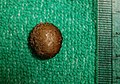 Bladder Stone with Ruler
 -
 Jackstone
 -
 Bladder Stone
 -
 Carel van Savoyen - Jan de Doot


See Also[edit]
