Montserrat: Difference between revisions
CSV import |
CSV import |
||
| Line 32: | Line 32: | ||
{{Volcanoes}} | {{Volcanoes}} | ||
{{Montserrat-stub}} | {{Montserrat-stub}} | ||
== Montserrat == | |||
<gallery> | |||
File:Little_Bay_from_above,_Montserrat.JPG|Little Bay from above, Montserrat | |||
File:Admiralty_Chart_No_254_Montserrat,_Published_1869.jpg|Admiralty Chart No 254 Montserrat, Published 1869 | |||
File:Montserrat_lime_industry_transport.jpg|Montserrat lime industry transport | |||
File:Parishes_of_Montserrat.svg|Parishes of Montserrat | |||
File:Coastal_cliffs.jpg|Coastal cliffs | |||
File:Montserrat_Salem_Eruption1.jpg|Montserrat Salem Eruption | |||
File:Montserrat_eruption.JPG|Montserrat eruption | |||
File:Soufriere_Hills_Volcano_dome_collapse.gif|Soufriere Hills Volcano dome collapse | |||
File:Plymouth_City_&_Volcano.jpg|Plymouth City & Volcano | |||
File:Icterus_oberi.jpg|Icterus oberi | |||
</gallery> | |||
Latest revision as of 21:29, 23 February 2025
Montserrat is a British Overseas Territory located in the Caribbean. The island is part of the Lesser Antilles chain and the Leeward Islands. It is known for its lush green mountains, active volcano, and rich cultural heritage.
Geography[edit]
Montserrat is approximately 16 km long and 11 km wide, with approximately 40 km of coastline. The island is characterized by three major mountain ranges, the Silver Hills, Centre Hills, and Soufrière Hills. The Soufrière Hills volcano is the highest point on the island, and has been active since 1995.
History[edit]
Montserrat was first inhabited by the Arawak and Carib people. Christopher Columbus sighted the island in 1493, naming it after the Montserrat monastery in Spain. The island was colonized by English and Irish settlers in 1632. In the late 18th century, Montserrat was a significant producer of sugar, rum, and sea island cotton. The abolition of slavery in 1834 led to economic decline and emigration. The island's economy revived in the 20th century with the growth of the tourist industry.
Culture[edit]
Montserrat's culture is a blend of African, Irish, and British influences. The island is known for its annual St. Patrick's Day festival, which commemorates the failed slave uprising of 1768. Montserrat is also known for its music, particularly the genre of soca.
Economy[edit]
Montserrat's economy is small and largely dependent on aid from the United Kingdom. The main sectors are construction, banking and insurance, and tourism. The eruption of the Soufrière Hills volcano in 1995 caused significant damage to the island's infrastructure and economy.
Demographics[edit]
The population of Montserrat is predominantly of African descent, with a small mixed-race and European minority. English is the official language. The majority of the population is Christian, with the Anglican Church being the largest denomination.
Government[edit]
Montserrat is a British Overseas Territory, with a governor appointed by the British monarch. The island has a unicameral Legislative Assembly, with members elected for five-year terms.
See also[edit]
| British Overseas Territories |
|---|
|
This British Overseas Territories related article is a stub.
|
| Caribbean topics | ||||||||||
|---|---|---|---|---|---|---|---|---|---|---|
This Caribbean-related article is a stub. You can help WikiMD by expanding it.
|
| Volcanoes | ||||||||||
|---|---|---|---|---|---|---|---|---|---|---|
This volcanology-related article is a stub.
|

This article is a Montserrat-related stub. You can help WikiMD by expanding it!
Montserrat[edit]
-
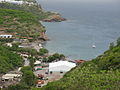 Little Bay from above, Montserrat
 -
 Admiralty Chart No 254 Montserrat, Published 1869
 -
 Montserrat lime industry transport
 -
 Parishes of Montserrat
 -
 Coastal cliffs
 -
 Montserrat Salem Eruption
 -
 Montserrat eruption
 -
 Soufriere Hills Volcano dome collapse
 -
 Plymouth City & Volcano
 -
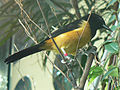 Icterus oberi


