Korean cuisine: Difference between revisions
CSV import |
CSV import Tags: mobile edit mobile web edit |
||
| Line 46: | Line 46: | ||
File:Korean_shredded_mung_bean_jelly_with_vegetables-Tangpyeongchae-01.jpg|Korean_cuisine | File:Korean_shredded_mung_bean_jelly_with_vegetables-Tangpyeongchae-01.jpg|Korean_cuisine | ||
File:Yayeon_(Night_Banquet).jpg|Korean_cuisine | File:Yayeon_(Night_Banquet).jpg|Korean_cuisine | ||
</gallery> | |||
<gallery> | |||
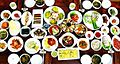
File:Han-jeongsik.jpg|Korean cuisine | |||
File:Bulgogi_2.jpg|Korean cuisine | |||
File:Naengmyeon_(cold_noodles).jpg|Korean cuisine | |||
File:Tteokmanduguk_(rice_cake_dumpling_soup).jpg|Korean cuisine | |||
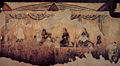
File:Goguryeo-Gakjeochong-Inner_life.jpg|Korean cuisine | |||
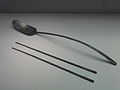
File:Spoon_of_Injong.jpg|Korean cuisine | |||
File:Korean.food-Budaejjigae-01.jpg|Korean cuisine | |||
File:Korean_chicken_dish_in_Sydney,_Australia.JPG|Korean cuisine | |||
File:Korea-Icheon-Dolsotbap-Cooked_rice_in_a_stone_pot-01.jpg|Korean cuisine | |||
File:Korean_noodles-Kongguksu-01.jpg|Korean cuisine | |||
File:Korean_shredded_mung_bean_jelly_with_vegetables-Tangpyeongchae-01.jpg|Korean cuisine | |||
File:Yayeon_(Night_Banquet).jpg|Korean cuisine | |||
</gallery> | </gallery> | ||
Revision as of 12:20, 18 February 2025
Korean cuisine is the customary cooking traditions and practices of the culinary arts of Korea. Korean cuisine has evolved through centuries of social and political change. Originating from ancient agricultural and nomadic traditions in Korea and southern Manchuria, Korean cuisine has evolved through a complex interaction of the natural environment and different cultural trends.
History
Korean cuisine is largely based on rice, vegetables, and meats. Traditional Korean meals are noted for the number of side dishes (banchan) that accompany steam-cooked short-grain rice. Kimchi is served often, sometimes at every meal. Commonly used ingredients include sesame oil, doenjang (fermented bean paste), soy sauce, salt, garlic, ginger, pepper flakes, gochujang (fermented red chili paste) and cabbage.
Ingredients
The Korean cuisine uses a wide variety of vegetables, which are often served uncooked, either in salads or pickles, as well as cooked in various stews, stir-fried dishes, and other hot dishes. Other ingredients include seaweed, potatoes, sweet potatoes, mushrooms, zucchini, cucumbers, radishes, scallions, garlic, ginger, red chili pepper flakes, soy sauce, sesame oil, and ginseng.
Dishes
Some well-known Korean dishes are Bibimbap, Bulgogi, Japchae, Samgyeopsal, Tteokbokki, and Kimchi. Each dish has its unique taste, preparation method, and cultural significance.
Beverages
Traditional Korean beverages, both alcoholic and non-alcoholic, include soju, makgeolli, sikhye, sujeonggwa, and yujacha.
See also
- List of Korean dishes
- Korean royal court cuisine
- Korean temple cuisine
- Korean street food
- Korean barbecue
- Korean Chinese cuisine
References
<references />
External links


Korean_cuisine
-
 Korean_cuisine
 -
 Korean_cuisine
 -
 Korean_cuisine
 -
 Korean_cuisine
 -
 Korean_cuisine
 -
 Korean_cuisine
 -
 Korean_cuisine
 -
 Korean_cuisine
 -
 Korean_cuisine
 -
 Korean_cuisine
 -
 Korean_cuisine
 -
Korean_cuisine


.jpg)
.jpg)


-
Korean cuisine
-
Korean cuisine
-
Korean cuisine
-
Korean cuisine
-
Korean cuisine
-
Korean cuisine
-
Korean cuisine
-
Korean cuisine
-
Korean cuisine
-
Korean cuisine
-
Korean cuisine
-
Korean cuisine

.jpg)