Makgeolli
Makgeolli is a traditional Korean alcoholic beverage. It is a type of rice wine made from rice and water, and is often home-brewed. Makgeolli is milky and off-white in color, and has a slightly sweet, tangy, bitter, and chalky taste. It is typically served chilled, in a bowl, and is often consumed quickly due to its short shelf life.
History[edit]
Makgeolli has a long history in Korea, dating back to the Goryeo Dynasty (918-1392). It was traditionally made at home, but commercial production began in the 20th century. Despite its long history, makgeolli has experienced periods of popularity and decline. In recent years, it has seen a resurgence in popularity both in Korea and abroad.
Production[edit]
Makgeolli is made by fermenting a mixture of boiled rice, water, and a starter culture known as nuruk. The nuruk is a crucial ingredient, as it contains the enzymes that convert the rice starches into sugars that can be fermented by the yeast. The fermentation process takes about a week, after which the liquid is strained from the solids to produce the final product.
Consumption[edit]
Makgeolli is typically served chilled and is often consumed quickly due to its short shelf life. It is traditionally served in a bowl, and is often accompanied by pajeon, a type of Korean pancake. In recent years, makgeolli has also been used as an ingredient in cocktails.
Health Benefits[edit]
Makgeolli contains a number of vitamins and amino acids, and is often touted for its health benefits. However, it is also high in calories and should be consumed in moderation.
See Also[edit]
References[edit]

This WikiMD article can only be edited by registered and verified editors. You can log in or register.
Makgeolli[edit]
-
 Makgeolli
 -
 Brewing makgeolli
 -
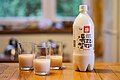 Makgeolli
 -
 Makgeolli
 -
 Makgeolli and dubu-kimchi (Tofu with Stir-Fried Kimchi)
 -
 Makgeolli


.jpg)
.jpg)


Medical Disclaimer: WikiMD is for informational purposes only and is not a substitute for professional medical advice. Content may be inaccurate or outdated and should not be used for diagnosis or treatment. Always consult your healthcare provider for medical decisions. Verify information with trusted sources such as CDC.gov and NIH.gov. By using this site, you agree that WikiMD is not liable for any outcomes related to its content. See full disclaimer.
Credits:Most images are courtesy of Wikimedia commons, and templates, categories Wikipedia, licensed under CC BY SA or similar.
Translate page: - East Asian
中文,
日本,
한국어,
South Asian
हिन्दी,
தமிழ்,
తెలుగు,
Urdu,
ಕನ್ನಡ,
Southeast Asian
Indonesian,
Vietnamese,
Thai,
မြန်မာဘာသာ,
বাংলা
European
español,
Deutsch,
français,
Greek,
português do Brasil,
polski,
română,
русский,
Nederlands,
norsk,
svenska,
suomi,
Italian
Middle Eastern & African
عربى,
Turkish,
Persian,
Hebrew,
Afrikaans,
isiZulu,
Kiswahili,
Other
Bulgarian,
Hungarian,
Czech,
Swedish,
മലയാളം,
मराठी,
ਪੰਜਾਬੀ,
ગુજરાતી,
Portuguese,
Ukrainian

