Samgyeopsal
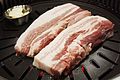
Samgyeopsal is a popular Korean dish made from grilled pork belly. It is a favorite among Koreans and has gained popularity worldwide. In this article, we will explore the origins of samgyeopsal, its preparation, and its cultural significance.
Origins[edit]
The origins of samgyeopsal can be traced back to the Korean barbecue culture. Grilling meat has been a part of Korean cuisine for centuries, and pork belly became a popular choice due to its rich flavor and tender texture. Samgyeopsal, which literally translates to "three-layered flesh," refers to the layers of meat, fat, and skin found in pork belly.
Preparation[edit]
To prepare samgyeopsal, the pork belly is usually sliced into thin strips and marinated in a mixture of soy sauce, garlic, sesame oil, and other seasonings. The marinated meat is then grilled over a charcoal or gas grill, allowing the fat to render and the meat to become crispy on the outside while remaining juicy on the inside.
Serving and Eating[edit]
Samgyeopsal is typically served with a variety of side dishes, known as banchan, which complement the flavors of the grilled meat. Some popular banchan include kimchi, pickled radishes, and lettuce leaves for wrapping the meat. The meat is often dipped in ssamjang, a spicy dipping sauce made from fermented soybean paste and chili paste, before being wrapped in lettuce and eaten.
Cultural Significance[edit]
Samgyeopsal holds a special place in Korean culture and is often enjoyed as a social activity. It is common for friends and family to gather around a grill, cook the meat together, and share a meal. This communal dining experience fosters a sense of togetherness and bonding.
Health Considerations[edit]
While samgyeopsal is undeniably delicious, it is important to note that it is a high-fat dish. Consuming excessive amounts of fatty meat can contribute to health issues such as high cholesterol and heart disease. Therefore, it is recommended to enjoy samgyeopsal in moderation as part of a balanced diet.
See Also[edit]
References[edit]
-
 Samgyeopsal
 -
 Samgyeopsal
 -
 Samgyeopsal

.jpg)


Medical Disclaimer: WikiMD is for informational purposes only and is not a substitute for professional medical advice. Content may be inaccurate or outdated and should not be used for diagnosis or treatment. Always consult your healthcare provider for medical decisions. Verify information with trusted sources such as CDC.gov and NIH.gov. By using this site, you agree that WikiMD is not liable for any outcomes related to its content. See full disclaimer.
Credits:Most images are courtesy of Wikimedia commons, and templates, categories Wikipedia, licensed under CC BY SA or similar.
Translate page: - East Asian
中文,
日本,
한국어,
South Asian
हिन्दी,
தமிழ்,
తెలుగు,
Urdu,
ಕನ್ನಡ,
Southeast Asian
Indonesian,
Vietnamese,
Thai,
မြန်မာဘာသာ,
বাংলা
European
español,
Deutsch,
français,
Greek,
português do Brasil,
polski,
română,
русский,
Nederlands,
norsk,
svenska,
suomi,
Italian
Middle Eastern & African
عربى,
Turkish,
Persian,
Hebrew,
Afrikaans,
isiZulu,
Kiswahili,
Other
Bulgarian,
Hungarian,
Czech,
Swedish,
മലയാളം,
मराठी,
ਪੰਜਾਬੀ,
ગુજરાતી,
Portuguese,
Ukrainian

